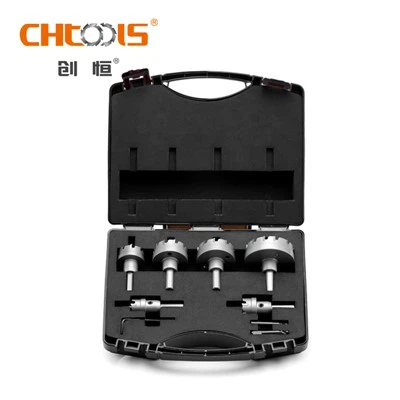
Hey there! As a supplier of solid rail cutters, I often get asked about how to adjust the cutting width of these nifty tools. It's a crucial aspect, especially for those in the railway maintenance and construction business. So, let's dive right in and explore the ins and outs of adjusting the cutting width of a solid rail cutter.
Understanding Solid Rail Cutters
Before we get into the adjustment process, let's quickly go over what solid rail cutters are. We offer two main types: HSS Split Type Solid Rail Cutter and HSS Integral Type Solid Rail Cutter.
The HSS Split Type Solid Rail Cutter is designed with a split design, which allows for easy installation and removal on the rail. It's great for quick and efficient cutting jobs. On the other hand, the HSS Integral Type Solid Rail Cutter is a one-piece design, providing more stability and durability during the cutting process.
Why Adjust the Cutting Width?
You might be wondering why you'd even need to adjust the cutting width. Well, different rail projects require different cutting widths. For example, if you're working on a narrow-gauge railway, you'll need a smaller cutting width. On the contrary, a standard or broad-gauge railway might demand a wider cutting width. Adjusting the cutting width ensures that you get a clean, precise cut every time, which is essential for the safety and integrity of the railway.
Tools You'll Need
Before you start adjusting the cutting width, you'll need a few tools. These typically include a set of wrenches, a measuring tape, and a feeler gauge. The wrenches will be used to loosen and tighten the necessary bolts and nuts. The measuring tape is for accurately measuring the cutting width, and the feeler gauge helps you check the clearance between the cutting blades.
Step-by-Step Guide to Adjusting the Cutting Width
Step 1: Safety First
Before you do anything, make sure you're following all the safety protocols. Wear appropriate safety gear, such as safety glasses, gloves, and ear protection. Also, ensure that the solid rail cutter is turned off and unplugged if it's an electric model.
Step 2: Locate the Adjustment Mechanism
The adjustment mechanism can vary depending on the type of solid rail cutter you have. In most cases, you'll find it near the cutting blades. Look for bolts or nuts that can be loosened to allow for adjustment.
Step 3: Loosen the Bolts
Using the appropriate wrenches, carefully loosen the bolts or nuts that hold the cutting blades in place. Don't remove them completely; just loosen them enough to allow for movement.
Step 4: Measure the Current Cutting Width
Use the measuring tape to measure the current cutting width. This will give you a baseline and help you determine how much adjustment is needed. Write down the measurement for reference.
Step 5: Make the Adjustment
Depending on whether you need to increase or decrease the cutting width, carefully move the cutting blades. If you're increasing the width, move the blades further apart. If you're decreasing the width, move the blades closer together. Make small adjustments at a time and re-measure after each adjustment.
Step 6: Check the Clearance
Use the feeler gauge to check the clearance between the cutting blades. The clearance should be consistent across the entire width. If the clearance is too large or too small, make further adjustments until it's within the recommended range.
Step 7: Tighten the Bolts
Once you've achieved the desired cutting width and the clearance is correct, tighten the bolts or nuts securely. Make sure they're tightened evenly to prevent any uneven cutting.
Step 8: Test the Cutter
Before you start using the solid rail cutter on an actual rail, it's a good idea to do a test cut on a scrap piece of rail. This will allow you to check if the cutting width is correct and if the cutter is working properly.
Tips for a Smooth Adjustment
- Take your time: Adjusting the cutting width is a precise process. Rushing it can lead to inaccurate cuts and potential damage to the cutter.
- Keep the blades clean: Dirt and debris can affect the adjustment and the cutting performance. Make sure to clean the blades regularly.
- Refer to the manual: If you're unsure about any step in the adjustment process, refer to the user manual that came with your solid rail cutter. It will have detailed instructions specific to your model.
Conclusion
Adjusting the cutting width of a solid rail cutter is an important skill for anyone working with railway tracks. By following the steps outlined above and using the right tools, you can ensure that your solid rail cutter is set up for the perfect cut every time.
If you're in the market for a high-quality solid rail cutter or have any questions about adjusting the cutting width, don't hesitate to reach out. We're here to help you find the best solution for your railway projects. Whether you need the HSS Split Type Solid Rail Cutter or the HSS Integral Type Solid Rail Cutter, we've got you covered. Contact us to start discussing your procurement needs and let's get your railway projects on track!


References
- Manufacturer's user manuals for solid rail cutters
- Industry best practices for railway maintenance and construction