


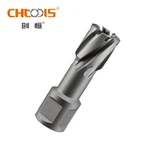
Countersink
What Are the Key Features and Applications of Multifunctional Countersinks?
1. The countersink is a multifunctional tool that can be used for drilling chamfering, deburring, countersink holes and other applications;
2. Countersink materials include: HSS, HSS-E, and carbide, meeting the cutting of soft steel, medium hard steel and high hard steel;
3. Countersinks are available with cylindrical, triangle, Weldon and taper shanks to meet the requirements of various working conditions.


Advantages of Countersink
Strong adaptability
Countersinks are suitable for various hole types, including blind holes, stepped holes and other complex hole types, showing strong adaptability and flexibility.
01
Improve processing efficiency
The design of the countersink allows for better chip removal and cooling, thereby improving processing efficiency and quality.
02
Multiple uses
Countersinks can not only be used for chamfering, but also for removing burrs or correcting jagged edges to improve the surface finish of the product.
03
Suitable for high-load cutting
Some countersink materials, such as cobalt-containing high-speed steel (M42), have high hardness and wear resistance, and are particularly suitable for processing stainless steel and high-temperature alloys.
04
Surface treatment technology
The use of aluminum titanium carbonitride (AlTiCN) composite coating has high hardness, high elasticity and low friction coefficient, suitable for various cutting conditions.
05
Types of Countersink
Conical Countersink
The most common type, featuring a conical (funnel-shaped) recess with a specific included angle (e.g., 82°, 90°, 100°, or 120°).
Tapered Countersink
Similar to a conical countersink but may refer to a more gradual or specific taper angle (e.g., for specialized fasteners).
Cylindrical Countersink
Often confused with a countersink, a counterbore creates a cylindrical recess (not conical) to accommodate a bolt head or washer.
Applications of Countersink
Metalworking and Manufacturing
Align and Seat Fasteners
Ensure flat-head machine screws (e.g., 90° countersunk screws) fit precisely in metal components, such as in machinery, automotive parts, or aerospace structures.
Deburr Holes
Remove sharp edges (burrs) from drilled holes, preventing injury and improving part quality (e.g., in sheet metal or castings).
Create Flush Surfaces
Allow components like hinges, brackets, or panels to attach smoothly without raised fasteners (e.g., in tooling, equipment enclosures, or structural steel).
Custom Machining
Produce specialized tapers for non-standard fasteners in industries like defense or aerospace.
Construction and Engineering
Install Flush-Mount Hardware
Attach fixtures like door handles, switch plates, or anchor bolts with flush surfaces for safety and aesthetics.
Concrete and Masonry Prep
Create recesses for anchors or screws in concrete or brick (though specialized masonry bits are often used alongside countersinks).
Sheet Metal Work
Secure panels or roofing materials with flush fasteners, preventing water accumulation or corrosion.
Automotive and Aerospace Industries
Aerodynamic Design
Flush countersunk screws reduce drag on aircraft surfaces (e.g., wing panels or fuselage skins).
Engine and Chassis Assembly
Secure components like engine mounts, brackets, or interior trim with flush fasteners to prevent interference or wear.
Safety-Critical Parts
Ensure reliable seating of bolts in automotive frames or aerospace structures, where loose fasteners could cause failures.
Specialized Industrial Uses
Medical Devices
Machining flush surfaces in surgical instruments or implantable devices for biocompatibility and safety.
Marine Engineering
Prevent corrosion by recessing fasteners in boat hulls or decking (often paired with waterproof sealants).
Food Processing Equipment
Ensure smooth, easy-to-clean surfaces by hiding fasteners in machinery or conveyor systems.
Why Choose Us
High Quality
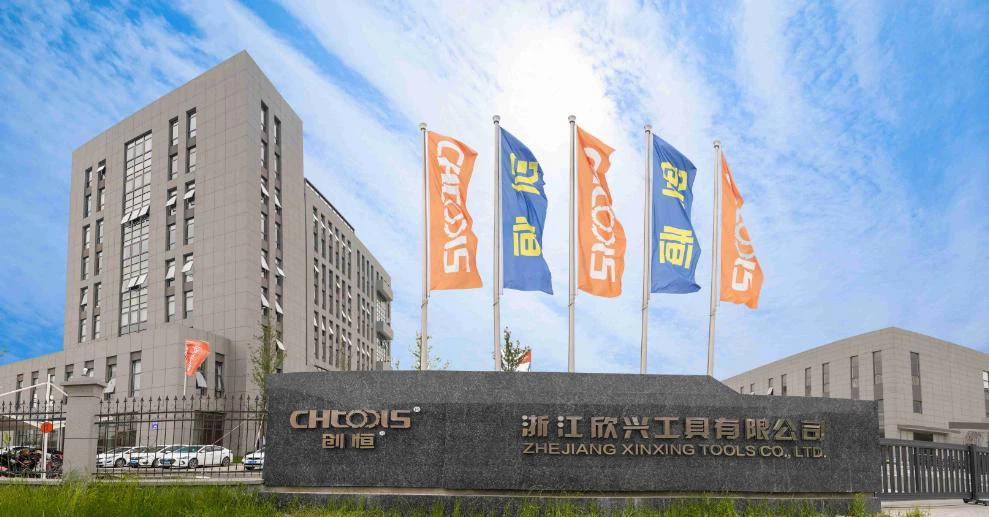
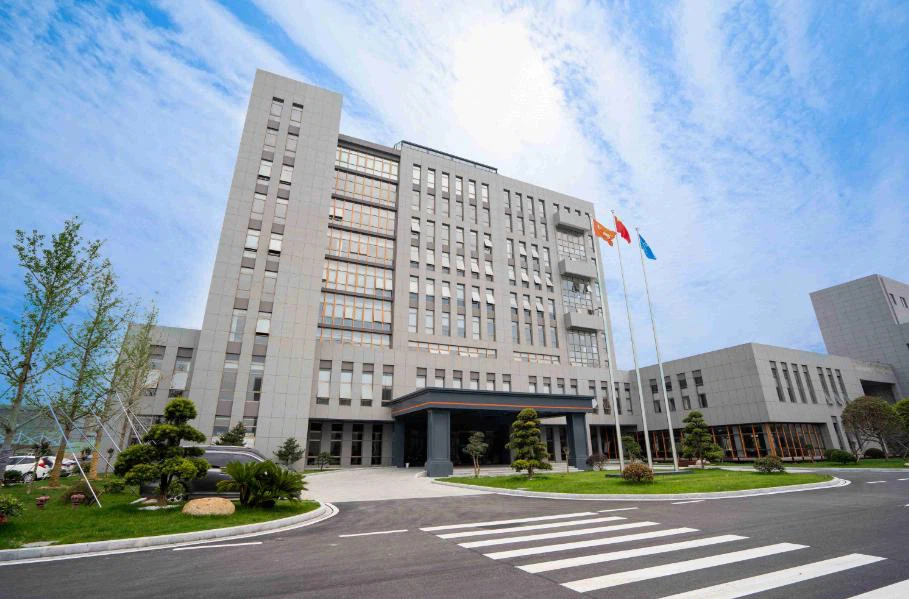
Xinxing digital factory covers an area of 66666 m2 with an annual output of 6 million pieces. Introducing advanced information systems to achieve the whole process of digital management, forging reliable quality.
01
Advanced Equipment
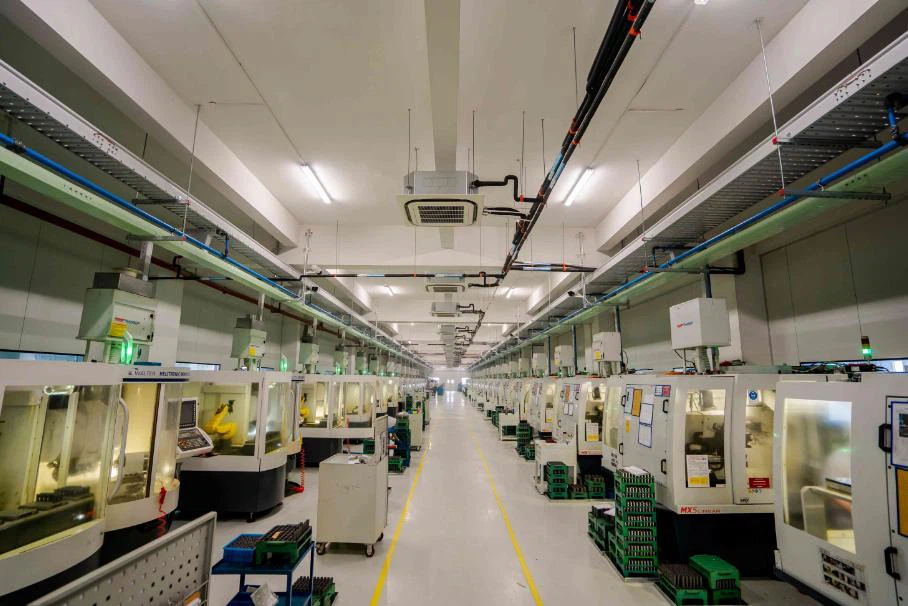
Workshops have modern production lines, equipped with CNC precision automatic lathe, vertical machining center, robots and other international advanced production equipment, to achieve fully automatic assembly line production, to ensure stable and superior quality.
02
Professional Team
Xinxing's R&D team is composed of professional engineers in the fields of materials, tool design, heat treatment, cutting application technology, manufacturing processes, and other fields. It is a highly experienced and creative technology research and development team.
03
Accept ODM/OEM
According to your process requirements, dedicated tools can be configured to improve efficiency or overcome the processing difficulties. Welcome to inquiry from us.
04
Company profile
Zhejiang Xinxing Tools Co., Ltd., was founded in 1994, is a high-tech enterprise focusing on hole processing technology. Since its founding nearly 30 years ago, we will be adhering to "focus on improving self", the company has set up the mission of providing manufacturing industry with high efficiency & precision cutting tools, consistently implement the innovative development strategy, deeply cultivate the productivity of cutting tools and technology improvement.
Our products include: Annular cutter, rail cutter, hole saw, spade drill, step drill, countersink, magnetic drill machine, solid carbide cutter, taps, B T A deep hole drill, etc.
Nearly 30 years of accumulation, we are equipped with international leading R & D and testing equipment, established a production line for large number of professional CNC tools, become a high performance CNC tool manufacturer combined with R & D, production and sales. Nearly 30 years of efforts, the company has 100 patents approximately, leading the industry standards drafting of 《ANNULAR CUTTER》, 《Internal cooling replaceable inserts spade drill》, Won the "national manufacturing industry individual champion demonstration enterprise" and other honors, it has been closely cooperated with customers from more than 80 countries.
In the future, we will be adhering to "the concept of innovative development, win-win cooperation", we carry out the mission of "providing efficient precision cutting tools", continue to focus on deep tillage and efficient cutting technology, and strive to become a more reliable tool manufacturing brand of you.
Certifications


Our Factory

Test equipment


FAQ
Q: 1.What is a countersink used for?
+
-
A: Chamfering a hole to countersink a screw head into the material.
Applying a chamfer to a hole before threading.
Deburring a sharp edge of a hole.
Q: 2.When to use a countersink?
+
-
A: Countersinking is done to insure that flat head screws sit flush to the work piece. A countersink produces a conical hole matching the angle of the screw so that when the screw is fully engaged the head will sit flush or slightly below the surface.
Q: 3.Why is it called countersink? Why is it called countersink?
+
-
A: You "counter" the conical shape of the bottom of a flat-head screw. "Countersink" can also refer to a cylindrical depression to accommodate a cylindrical screw head (such as a socket-head cap screw) so the top sits below flush with the surface.
Q: 4.What is the process of countersinking?
+
-
A: Countersinking is a type of technique used to develop assemblies, smooth out indentations, and countersink holes in different types of material. It is often used so that the screws are countersunk at the same level as the surface being worked on.