


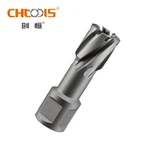
Thread Tap
What is Thread Tap?
Tap is a tool used for machining internal threads, which is widely used in machinery manufacturing, automobiles, aerospace, electronics and other fields. Its main feature is to form internal threads on the wall of the workpiece hole by cutting or extrusion, and it is suitable for machining various materials (such as steel, cast iron, aluminum, copper, etc.).


Advantages of Thread Tap
High-precision thread processing capability
Taps can produce threads that meet standard tolerances (such as metric 6H, 6g) to meet precision assembly needs (such as engine blocks, hydraulic components).
01
Wide range of material adaptability
Cutting taps (such as coated taps) are suitable for mild steel, stainless steel, hardened steel, etc., and optimize chip evacuation and cutting performance through different groove types (spiral groove, spiral tip).
02
Strong versatility
Straight groove taps are suitable for fast through-hole processing, and spiral groove taps are suitable for blind hole chip removal, meeting the needs of different hole shapes.
03
Long life design
Carbide (WC) or high speed steel (HSS) material with wear-resistant coating (such as TiAlN, DLC), tool life can be extended 2-5 times compared with ordinary taps (such as coated taps when processing stainless steel).
04
Low equipment threshold
No special machine tools are required, ordinary drilling machines can complete tapping, reducing the processing costs of small and medium-sized enterprises.
0
Types of Thread Tap
1. Taps are divided into processing methods: cutting taps and forming taps;
2. Cutting taps are divided into spiral flute taps, spiral tip taps and straight flute taps according to their shapes;
3. According to application occasions: P series, H series, E series and C series;
- P series is used in professional production lines with high reliability requirements;
- H series is used in professional processing occasions with high performance requirements;
- E series is used in machining situations with stable performance;
- C series is used for professional production lines with high durability requirements;
4. According to processing materials: carbon steel, alloy, stainless steel, titanium alloy, nickel alloy, cast iron, non-ferrous metal, hardened steel and other materials.
Applications of Thread Tap
Mechanical manufacturing
Processing the connection threads of parts (such as bolt holes and nut holes), which are commonly found in gearboxes, flanges, etc.
01
Automotive industry
Processing threaded holes in engine blocks and gearbox housings requires high precision and mass production efficiency.
02
Chemical Solutions Aerospace
Thread processing of aluminum alloy and titanium alloy structural parts requires both lightweight and high strength (such as extrusion taps to reduce material damage).
03
Petrochemical Solutions Electronics and precision instruments:
Processing of small-size threads (such as M1.6-M3) for electronic component installation requires high surface finish (extrusion taps are preferred).
04
Why Choose Us
High Quality
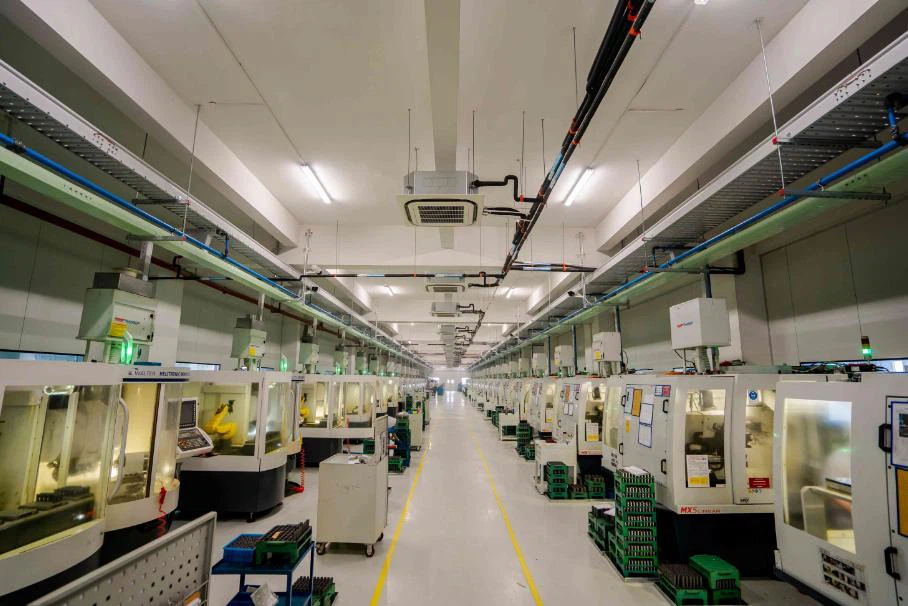
Xinxing digital factory covers an area of 66666 m2 with an annual output of 6 million pieces. Introducing advanced information systems to achieve the whole process of digital management, forging reliable quality.
01
Advanced Equipment
Workshops have modern production lines, equipped with CNC precision automatic lathe, vertical machining center, robots and other international advanced production equipment, to achieve fully automatic assembly line production, to ensure stable and superior qu.
02
Professional Team
Xinxing's R&D team is composed of professional engineers in the fields of materials, tool design, heat treatment, cutting application technology, manufacturing processes, and other fields. It is a highly experienced and creative technology research and development team.
03
Accept ODM/OEM
According to your process requirements, dedicated tools can be configured to improve efficiency or overcome the processing difficulties. Welcome to inquiry from us.
04
Company profile
Zhejiang Xinxing Tools Co., Ltd., was founded in 1994, is a high-tech enterprise focusing on hole processing technology. Since its founding nearly 30 years ago, we will be adhering to "focus on improving self", the company has set up the mission of providing manufacturing industry with high efficiency & precision cutting tools, consistently implement the innovative development strategy, deeply cultivate the productivity of cutting tools and technology improvement.
Our products include: Annular cutter, rail cutter, hole saw, spade drill, step drill, countersink, magnetic drill machine, solid carbide cutter, taps, B T A deep hole drill, etc.
Nearly 30 years of accumulation, we are equipped with international leading R & D and testing equipment, established a production line for large number of professional CNC tools, become a high performance CNC tool manufacturer combined with R & D, production and sales. Nearly 30 years of efforts, the company has 100 patents approximately, leading the industry standards drafting of 《ANNULAR CUTTER》, 《Internal cooling replaceable inserts spade drill》, Won the "national manufacturing industry individual champion demonstration enterprise" and other honors, it has been closely cooperated with customers from more than 80 countries.
In the future, we will be adhering to "the concept of innovative development, win-win cooperation", we carry out the mission of "providing efficient precision cutting tools", continue to focus on deep tillage and efficient cutting technology, and strive to become a more reliable tool manufacturing brand of you.
Certifications


Our Factory



Test equipment


FAQ
Q: 1.What is a pipe thread tap?
+
-
A: Pipe Taps are used to cut internal threads in parts or fittings that will be mated with threaded pipe or fittings to make a pressure tight joint. Pipe threads require higher cutting forces than regular machine thread tapping because the threads require 100% thread depth. Most threads on tapered pipe taps are cutting.
Q: 2. What is the difference between thread tap and thread mill?
+
-
A: In addition, taps are designed to produce only one size and type of thread, and often boast material-specific geometries. A full-profile 16-pitch thread mill, on the other hand, can cut any 16-pitch thread (provided it fits in the hole) just as a 20-pitch thread mill can cut 20-pitch threads, and so on.
Q: 3.Why do extrusion taps have a longer life?
+
-
A: No cutting edge wear, the main wear comes from extrusion friction, and coatings (such as DLC) can further reduce friction.
Q: 4.What should I do if the tap breaks during tapping?
+
-
A: Small diameter taps: Remove by spark erosion; Large diameter taps: Remove by using a broken tap extractor (left-hand drill bit rotates in reverse to remove) or chisel in a counterclockwise direction.