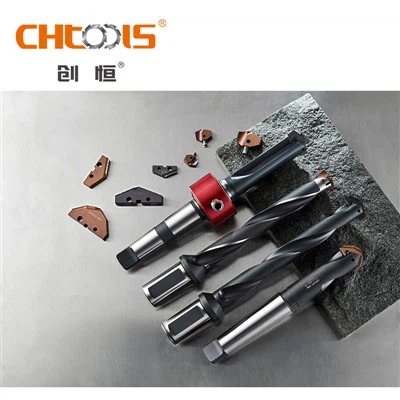
Can Indexable Drill be used for deep - hole drilling?
In the world of metalworking and machining, deep - hole drilling is a critical operation that presents unique challenges. As a supplier of Indexable Drill, I often receive inquiries from customers about whether our indexable drills can be effectively used for deep - hole drilling. In this blog post, I will explore this topic in detail, analyzing the capabilities, limitations, and considerations when using indexable drills for deep - hole drilling.
Understanding Indexable Drills
Indexable drills are cutting tools that feature replaceable inserts. These inserts are made from hard materials such as carbide, which provides excellent wear resistance and cutting performance. The design of indexable drills allows for easy and quick replacement of the cutting edges when they become worn, reducing downtime and cost.
One of the main advantages of indexable drills is their versatility. They can be used for a wide range of materials, including steels, stainless steels, cast irons, and non - ferrous metals. They are also available in various diameters and lengths, making them suitable for different machining applications.
The Challenges of Deep - Hole Drilling
Deep - hole drilling is defined as drilling holes where the depth - to - diameter ratio is greater than 5:1. As the depth of the hole increases, several challenges arise. One of the primary issues is chip evacuation. In deep - hole drilling, chips can accumulate in the hole, causing the drill to bind, overheat, and potentially break. This can lead to poor hole quality, increased tool wear, and reduced productivity.


Another challenge is coolant delivery. Effective coolant delivery is crucial in deep - hole drilling to lubricate the cutting edges, remove heat, and flush out chips. Ensuring that the coolant reaches the cutting zone at the bottom of the deep hole can be difficult, especially in high - aspect - ratio holes.
Can Indexable Drills Overcome These Challenges?
The answer is yes, but with certain conditions. Indexable drills can be used for deep - hole drilling, but their success depends on several factors.
Chip Evacuation
Indexable drills are designed with flutes that help in chip evacuation. However, for deep - hole drilling, the flute design needs to be optimized. Some indexable drills feature special flute geometries that promote better chip flow. For example, a helical flute design can help guide the chips out of the hole more efficiently. Additionally, the insert geometry can also play a role in chip formation. Inserts with a positive rake angle tend to produce smaller, more manageable chips that are easier to evacuate.
Spade Drill Insert is a type of insert that can be used in indexable drills for deep - hole drilling. These inserts are designed to break the chips into smaller pieces, which are easier to remove from the hole. By using spade drill inserts, the risk of chip clogging is reduced, improving the overall performance of the drill in deep - hole applications.
Coolant Delivery
To address the coolant delivery challenge, many modern indexable drills are equipped with internal coolant channels. These channels allow the coolant to be delivered directly to the cutting edges, even in deep holes. The coolant helps to reduce friction, lower the cutting temperature, and flush out chips. When using indexable drills for deep - hole drilling, it is essential to ensure that the coolant system is properly configured to provide sufficient pressure and flow rate.
Tool Design and Rigidity
The design and rigidity of the indexable drill are also important factors. For deep - hole drilling, a drill with a rigid body is required to prevent deflection and vibration. Some indexable drills are made from high - strength materials and have a robust construction to withstand the forces generated during deep - hole drilling. Additionally, the drill's diameter and length should be carefully selected based on the specific application requirements. A larger diameter drill may provide more rigidity but may also require more power and generate more heat.
Considerations for Using Indexable Drills in Deep - Hole Drilling
When using indexable drills for deep - hole drilling, the following considerations should be taken into account:
Insert Selection
The choice of insert is crucial. Different inserts are designed for different materials and cutting conditions. For deep - hole drilling, inserts with good wear resistance and chip - breaking capabilities are preferred. Inserts made from carbide grades with high toughness and heat resistance can withstand the harsh conditions in deep - hole drilling.
Cutting Parameters
Proper cutting parameters, such as cutting speed, feed rate, and depth of cut, need to be selected. These parameters should be adjusted based on the material being drilled, the drill diameter, and the depth of the hole. In general, lower cutting speeds and feed rates may be required in deep - hole drilling to ensure better chip evacuation and tool life.
Machine Tool Capability
The machine tool used for deep - hole drilling must be capable of providing the necessary power, torque, and stability. A rigid machine with a high - precision spindle is essential to ensure accurate hole placement and consistent hole quality.
Case Studies
Let's look at some real - world examples of using indexable drills for deep - hole drilling. A manufacturing company was tasked with drilling holes with a depth - to - diameter ratio of 10:1 in stainless steel. They initially tried using traditional twist drills but faced significant issues with chip evacuation and tool breakage. After switching to an indexable drill with optimized flute design and Insert Drill inserts, they were able to achieve better chip evacuation, reduced tool wear, and improved hole quality. The productivity also increased as the drill could run at higher feed rates without the risk of breakage.
Conclusion
In conclusion, indexable drills can be used for deep - hole drilling, but careful consideration must be given to chip evacuation, coolant delivery, tool design, insert selection, cutting parameters, and machine tool capability. When these factors are properly addressed, indexable drills can offer a cost - effective and efficient solution for deep - hole drilling applications.
If you are interested in exploring the use of indexable drills for your deep - hole drilling needs, I encourage you to contact us. Our team of experts can provide you with detailed information, technical support, and help you select the right indexable drill for your specific application. We are committed to providing high - quality products and excellent customer service to meet your machining requirements.
References
- "Metal Cutting Principles" by Paul K. Wright and David A. Boothroyd
- "Machining Handbook" by Industrial Press Inc.
- Technical literature from leading tool manufacturers on indexable drills and deep - hole drilling.