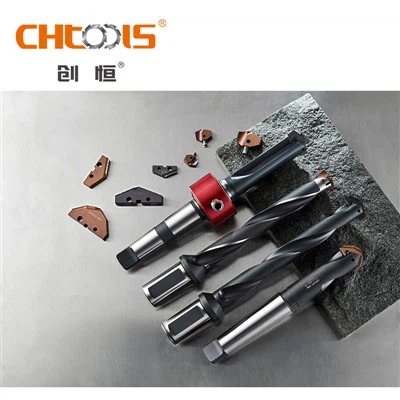
When it comes to precision cutting and hole-making in various materials, annular cutters have long been a trusted tool in the toolkit of professionals. These cutters are designed to remove a core from the material, leaving a clean and accurate hole. But a question that often arises is whether an annular cutter can be used for making irregular-shaped holes. As a supplier of annular cutters, I'm here to delve into this topic and provide you with a comprehensive answer.
How Annular Cutters Work
Before we discuss the possibility of using annular cutters for irregular-shaped holes, it's essential to understand how they function. Annular cutters are typically made of high-speed steel (HSS) or carbide-tipped materials. They have a hollow center, which allows them to cut only the outer perimeter of the hole, rather than removing all the material from the center like a traditional drill bit. This design makes them more efficient, as they require less power and generate less heat during the cutting process.
The cutting teeth on an annular cutter are arranged around the circumference of the cutter. As the cutter rotates, these teeth shear through the material, creating a clean and precise hole. The core that is removed during the cutting process can be easily ejected, leaving a smooth and accurate hole behind.


Limitations of Annular Cutters for Irregular-Shaped Holes
The primary limitation of annular cutters when it comes to making irregular-shaped holes is their circular design. Annular cutters are specifically designed to create circular holes, and their cutting action is optimized for this purpose. The circular shape of the cutter means that it can only create holes with a consistent diameter and a smooth, circular perimeter.
Irregular-shaped holes, on the other hand, have non-circular perimeters and may require complex cutting paths. These holes can have curves, angles, or irregular shapes that cannot be easily replicated using a circular annular cutter. The cutting teeth on an annular cutter are designed to cut in a circular motion, and they may not be able to follow the complex paths required to create irregular-shaped holes.
Another limitation is the rigidity of the annular cutter. Annular cutters are typically designed to be used in a drill press or a magnetic drill, which provides a stable and rigid platform for cutting. This rigidity is necessary to ensure accurate and consistent cutting. However, when trying to create irregular-shaped holes, the cutter may need to be moved in different directions and at different angles, which can be difficult to achieve with a rigid cutter.
Alternative Tools for Irregular-Shaped Holes
While annular cutters may not be the best choice for making irregular-shaped holes, there are several alternative tools that can be used. One such tool is the Carbide Hole Saw. Carbide hole saws are designed to cut through a variety of materials, including wood, metal, and plastic. They have a circular blade with carbide teeth that can be used to create holes of different sizes and shapes. Unlike annular cutters, carbide hole saws can be used to create holes with irregular perimeters by following the shape of the template or pattern.
Another alternative is the HSS Step Drill. HSS step drills are designed to create holes of different sizes in a single operation. They have a stepped design that allows them to drill holes of increasing diameter with each step. This makes them ideal for creating holes with irregular shapes, as they can be used to create holes with different diameters and depths.
For larger irregular-shaped holes, a 3 Inch Hole Saw can be a good option. These hole saws are designed to cut through thick materials and can create holes with a larger diameter. They can be used in conjunction with a drill press or a magnetic drill to create accurate and precise holes.
When Annular Cutters Can Be Used for Irregular-Shaped Holes
While annular cutters are not typically used for making irregular-shaped holes, there are some situations where they can be used in combination with other tools or techniques. For example, if the irregular-shaped hole can be broken down into a series of circular or semi-circular sections, an annular cutter can be used to create each section separately. These sections can then be joined together to form the final irregular-shaped hole.
Another approach is to use an annular cutter to create a series of holes around the perimeter of the irregular-shaped hole. These holes can then be connected using a saw or a grinder to create the final shape. This method can be time-consuming and requires some skill and precision, but it can be an effective way to create irregular-shaped holes using an annular cutter.
Conclusion
In conclusion, while annular cutters are excellent tools for creating circular holes, they have limitations when it comes to making irregular-shaped holes. Their circular design and rigid structure make them unsuitable for creating holes with non-circular perimeters and complex shapes. However, there are several alternative tools available, such as carbide hole saws, HSS step drills, and 3 inch hole saws, that are better suited for this task.
If you have a project that requires the creation of irregular-shaped holes, it's important to choose the right tool for the job. Consider the material you are working with, the size and shape of the hole, and the level of precision required. If you have any questions or need further advice, please don't hesitate to contact us. As a leading supplier of annular cutters and other cutting tools, we have the expertise and experience to help you find the right solution for your needs. Whether you are a professional contractor or a DIY enthusiast, we are here to support you in your cutting and hole-making projects. Contact us today to discuss your requirements and explore our range of high-quality cutting tools.
References
- "Cutting Tools Handbook" by Industrial Press Inc.
- "Machining Fundamentals" by John A. Schey