

The straightness of holes drilled by indexable drills is a critical factor in many machining applications. As a supplier of indexable drills, I understand the importance of this characteristic and its impact on the quality of the final product. In this blog, I will delve into what straightness means in the context of holes drilled by indexable drills, the factors that affect it, and how we, as a supplier, ensure the best possible straightness in our products.
Understanding the Concept of Straightness in Drilled Holes
Straightness in the context of holes drilled by indexable drills refers to how closely the axis of the drilled hole aligns with the intended or theoretical axis. A perfectly straight hole has an axis that is a straight line from one end of the hole to the other, without any deviations or bends. This is crucial in applications where the hole will be used for precise fitting of components, such as in automotive engines, aerospace parts, and high - precision machinery.
For example, in an automotive engine, a cylinder bore needs to be as straight as possible. If the hole is not straight, it can lead to uneven wear on the piston, reduced engine efficiency, and even engine failure over time. Similarly, in aerospace applications, the straightness of holes where critical components are mounted is essential for the structural integrity and performance of the aircraft.
Factors Affecting the Straightness of Holes Drilled by Indexable Drills
Drill Design and Geometry
The design and geometry of the indexable drill play a significant role in hole straightness. A well - designed drill with balanced cutting edges can distribute the cutting forces evenly during the drilling process. This even distribution of forces helps to prevent the drill from deviating from the intended axis.
Our indexable drills, such as the Indexable Drill, are engineered with precise cutting edge geometries. The tips are designed to enter the workpiece smoothly and maintain a stable cutting action throughout the drilling process. This stability is a key factor in achieving high - straightness holes.
Workpiece Material
The material properties of the workpiece have a direct impact on hole straightness. Different materials have different levels of hardness, ductility, and grain structure. For instance, drilling through a hard and brittle material like cast iron can be challenging. The drill may encounter sudden changes in the material's structure, which can cause it to deflect and result in a non - straight hole.
On the other hand, a more ductile material like aluminum may require a different approach. If the cutting parameters are not optimized, the material may deform around the drill, causing the drill to wander and affecting the straightness of the hole. As a supplier, we provide detailed guidelines on the appropriate cutting parameters for different workpiece materials to ensure optimal hole straightness.
Cutting Parameters
Cutting parameters such as cutting speed, feed rate, and depth of cut also influence hole straightness. An incorrect combination of these parameters can lead to excessive cutting forces, vibration, and heat generation, all of which can cause the drill to deviate from the intended path.
For example, a very high feed rate can cause the drill to push through the material too quickly, resulting in a less - controlled cutting process and potentially a non - straight hole. Conversely, a very low cutting speed may cause the drill to rub against the material rather than cut it cleanly, leading to increased friction and possible deviation.
We recommend specific cutting parameters for our Best Indexable Drill based on the type of workpiece material and the drill's diameter. These recommendations are backed by extensive testing and research to ensure the best possible straightness in the drilled holes.
Machine Tool and Setup
The quality and stability of the machine tool used for drilling, as well as the setup, are crucial for hole straightness. A machine with poor rigidity or inaccurate alignment can transmit vibrations to the drill, causing it to deviate from the intended axis.
Proper fixturing of the workpiece is also essential. If the workpiece is not securely held, it can move during the drilling process, leading to a non - straight hole. Our technical support team can offer advice on machine tool selection and workpiece setup to ensure that our indexable drills can achieve the highest level of hole straightness.
How Our Indexable Drills Ensure High Straightness
Advanced Manufacturing Technologies
We use state - of - the - art manufacturing technologies to produce our indexable drills. Computer - controlled machining processes ensure the highest level of precision in the production of the drill body and the cutting inserts. This precision results in a drill with consistent geometry and balance, which is essential for achieving straight holes.
Quality Control Measures
Quality control is a top priority for us. Every indexable drill undergoes a series of rigorous tests before it leaves our factory. We check the accuracy of the cutting edge geometry, the balance of the drill, and its ability to drill straight holes. Our quality control team uses advanced metrology equipment to ensure that our drills meet or exceed industry standards for hole straightness.
Research and Development
We invest heavily in research and development to continuously improve the performance of our indexable drills. Our R & D team is constantly exploring new materials, coatings, and design concepts to enhance hole straightness and other key characteristics. We also collaborate with leading industry partners and research institutions to stay at the forefront of technological advancements in indexable drill design.
Applications of High - Straightness Holes Drilled by Indexable Drills
Automotive Industry
In the automotive industry, indexable drills are used to drill holes in engine blocks, transmission casings, and other critical components. The high straightness of the holes ensures proper fit and alignment of internal parts, improving engine performance, reliability, and fuel efficiency.
Aerospace Industry
Aerospace components require extremely high precision and reliability. Indexable drills are used to drill holes in aircraft frames, turbine blades, and other structural parts. The straightness of these holes is crucial for maintaining the structural integrity of the aircraft and ensuring safe flight operations.
General Machinery Manufacturing
In general machinery manufacturing, indexable drills are used to produce a wide range of products, from small hand tools to large industrial equipment. High - straightness holes are essential for the proper functioning of gears, shafts, and other moving parts.

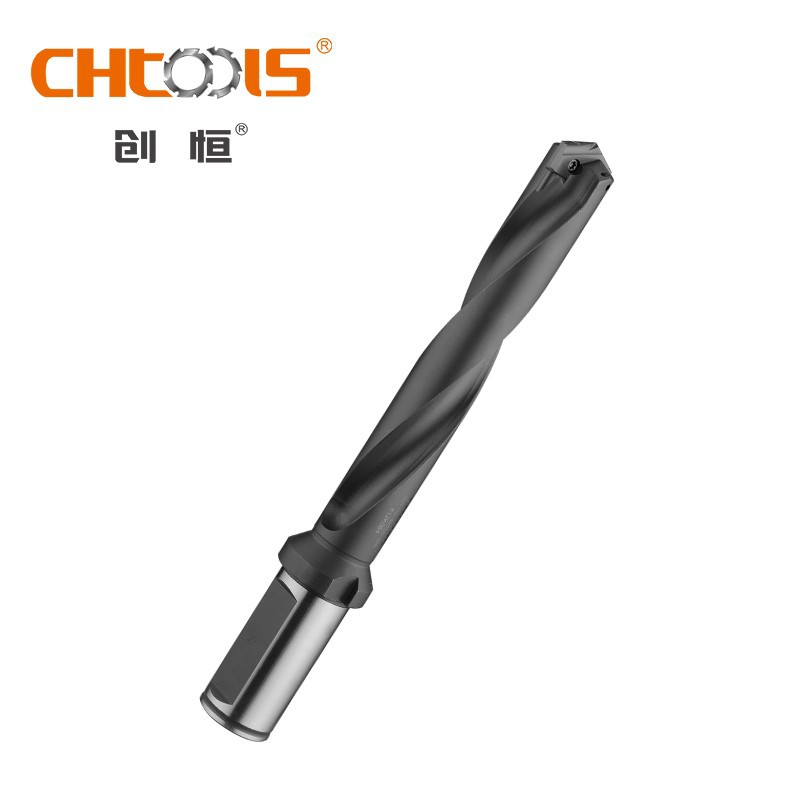
The Role of Spade Drill Holders in Hole Straightness
Spade drill holders, such as the Spade Drill Holder, also play an important role in ensuring the straightness of holes drilled by indexable drills. A well - designed spade drill holder provides stable support for the drill, reducing vibration and preventing the drill from deviating during the drilling process.
Our spade drill holders are made from high - quality materials and are engineered to provide a precise fit for our indexable drills. They are designed to absorb cutting forces and dissipate heat, ensuring a smooth and stable drilling operation.
Contact Us for Your Indexable Drill Needs
If you are in the market for high - quality indexable drills that can deliver excellent hole straightness, we are here to help. Our team of experts can provide you with detailed product information, technical support, and customized solutions to meet your specific machining requirements.
Whether you are a small - scale workshop or a large - scale manufacturing plant, we have the right indexable drill for you. Contact us today to start a discussion about your needs and explore how our products can improve the quality and efficiency of your machining operations.
References
- Smith, J. (2018). "Advanced Drilling Techniques for High - Precision Holes." Machining Technology Journal, 25(3), 45 - 52.
- Brown, A. (2019). "The Impact of Drill Geometry on Hole Quality." Manufacturing Science Review, 12(2), 67 - 74.
- Johnson, R. (2020). "Optimizing Cutting Parameters for Straight Hole Drilling." Industrial Machining Magazine, 30(4), 89 - 96.


