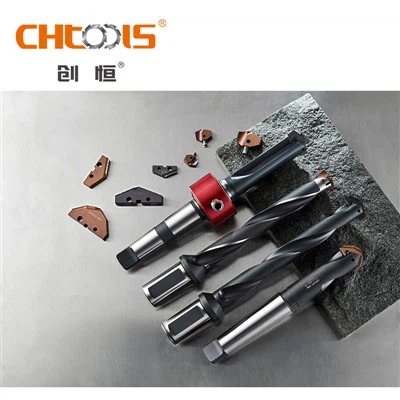
Hey there! As a supplier of Step Bit products, I've often pondered whether Step Bit is a fundamental concept in physics. At first glance, Step Bit might seem like just a tool in the hardware world, but when you dig deeper, there are some interesting connections to the fundamental principles of physics.
Let's start by understanding what a Step Bit is. A Step Drill Bit is a specialized drill bit with a series of steps or graduated diameters along its length. This design allows it to drill holes of different sizes without the need to change the drill bit constantly. It's a real time - saver in many applications, especially in metalworking. For instance, a Step Drill Bit for Metal is specifically designed to cut through metal materials efficiently. And if you need a variety of sizes, a Step Drill Bit Set is a great option.
When we talk about physics, one of the most basic concepts is force. When you use a Step Bit to drill a hole, you're applying a force to the drill, which in turn transfers that force to the material being drilled. According to Newton's second law of motion, F = ma (force equals mass times acceleration). The force you apply to the drill causes it to accelerate and penetrate the material. The mass of the drill bit and the material's resistance play crucial roles here. A heavier drill bit might require more force to accelerate, but it can also provide more momentum to cut through tougher materials.
Another important aspect is friction. Friction occurs between the Step Bit and the material during the drilling process. Friction generates heat, and too much heat can damage the drill bit and the material. That's why many Step Bits are made from materials with high heat - resistance, like high - speed steel or cobalt. The design of the Step Bit also helps to reduce friction. The steps on the bit are designed in a way that allows chips of the material to be removed easily, preventing them from building up and increasing friction.
Torque is yet another physical concept related to Step Bits. Torque is the measure of the force that can cause an object to rotate. When you're using a drill with a Step Bit, you're essentially applying torque to the drill bit to make it rotate and cut through the material. The amount of torque required depends on the size of the hole you're drilling and the hardness of the material. A larger hole or a harder material will generally require more torque.
Now, let's think about the concept of energy. Drilling with a Step Bit involves the conversion of energy. The electrical energy from the drill is converted into mechanical energy to make the drill bit rotate. Some of this mechanical energy is then used to break the bonds between the atoms in the material, allowing the drill bit to cut through it. There's also energy lost in the form of heat due to friction, as we mentioned earlier.


From a material science perspective, which is closely related to physics, the properties of the Step Bit material are crucial. The material's hardness, toughness, and thermal conductivity all affect how well the Step Bit performs. For example, a harder material can maintain its sharpness for longer, but it might be more brittle and prone to cracking. A material with good thermal conductivity can dissipate heat more effectively, reducing the risk of overheating.
In the world of engineering, Step Bits are used in a wide range of applications, from automotive manufacturing to electronics. In each of these applications, the principles of physics come into play. In automotive manufacturing, Step Bits are used to drill holes in metal parts. The precision of the holes is crucial for the proper functioning of the vehicle. The physical properties of the Step Bit and the metal material determine how accurately the holes can be drilled.
In electronics, Step Bits are used to drill holes in printed circuit boards (PCBs). The thin and delicate nature of PCBs requires a Step Bit that can drill small, precise holes without causing damage. Here, the balance between force, torque, and friction is even more critical.
So, is Step Bit a fundamental concept in physics? Well, it might not be as fundamental as concepts like gravity or electromagnetism, but it definitely involves a lot of fundamental physical principles. The design and use of Step Bits are based on our understanding of force, friction, torque, energy, and material properties.
As a Step Bit supplier, I've seen firsthand how these physical concepts translate into real - world performance. We constantly strive to improve the design of our Step Bits to make them more efficient and effective. By understanding the physics behind the drilling process, we can develop better materials and designs that reduce friction, increase torque transfer, and improve heat dissipation.
If you're in the market for high - quality Step Bits, whether it's a single Step Drill Bit, a Step Drill Bit for Metal, or a Step Drill Bit Set, we've got you covered. Our products are designed with the latest knowledge of physics and engineering to ensure optimal performance.
If you're interested in learning more about our Step Bit products or have any questions regarding their application in your specific projects, don't hesitate to reach out. We're always happy to have a chat and discuss how our Step Bits can meet your needs. Whether you're a professional in the manufacturing industry or a DIY enthusiast, we're here to provide you with the best Step Bit solutions.
References
- Halliday, D., Resnick, R., & Walker, J. (2014). Fundamentals of Physics. Wiley.
- Callister, W. D., & Rethwisch, D. G. (2016). Materials Science and Engineering: An Introduction. Wiley.