Hey there! As a supplier of modular drills, I've seen firsthand the challenges that come with dealing with high cutting forces. It's a common headache for many in the machining industry, but don't worry – I've got some tips and tricks up my sleeve to help you reduce those pesky cutting forces on your modular drill.
Understanding the Basics of Cutting Forces
Before we dive into the solutions, let's quickly go over what cutting forces are and why they matter. When you're using a modular drill to cut through a workpiece, there are two main types of forces at play: the main cutting force and the feed force. The main cutting force is the force that acts in the direction of the cutting edge, while the feed force is the force that moves the drill forward into the workpiece.
High cutting forces can lead to a whole bunch of problems. They can cause excessive wear and tear on your drill bits, reduce the accuracy of your cuts, and even lead to machine breakdowns. So, finding ways to reduce these forces is crucial for improving the efficiency and longevity of your modular drill.
Selecting the Right Drill Bits
One of the first steps in reducing cutting forces is to choose the right drill bits for the job. Different materials and applications require different types of drill bits, so it's important to do your research and pick the ones that are best suited for your specific needs.
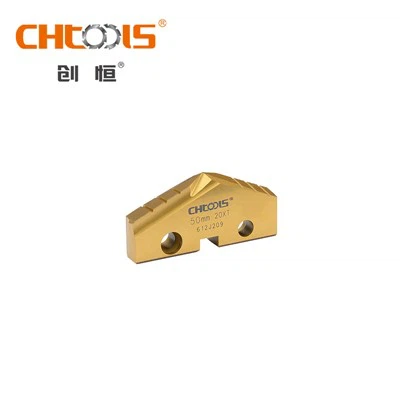
For example, if you're working with hard materials like stainless steel or titanium, you'll want to use drill bits with a high carbide content. Carbide is a super-hard material that can withstand the high pressures and temperatures generated during the cutting process. You can check out our Carbide Insert Of High Speed Modular Drill for some great options.
On the other hand, if you're working with softer materials like aluminum or brass, you can get away with using drill bits with a lower carbide content. These bits are usually more affordable and can still get the job done effectively.
Optimizing the Cutting Parameters
Another important factor in reducing cutting forces is to optimize your cutting parameters. This includes things like the cutting speed, feed rate, and depth of cut.
Cutting Speed
The cutting speed is the speed at which the drill bit rotates. If you set the cutting speed too high, you'll generate more heat and increase the cutting forces. On the other hand, if you set it too low, you'll waste time and reduce the efficiency of your machining process.
To find the optimal cutting speed for your modular drill, you'll need to consider factors like the material you're cutting, the diameter of the drill bit, and the type of coating on the bit. As a general rule of thumb, you can start with a lower cutting speed and gradually increase it until you find the sweet spot.
Feed Rate
The feed rate is the speed at which the drill bit moves forward into the workpiece. Similar to the cutting speed, if you set the feed rate too high, you'll increase the cutting forces and risk damaging the drill bit. If you set it too low, you'll waste time and reduce the efficiency of your machining process.
To find the optimal feed rate, you'll need to consider factors like the material you're cutting, the diameter of the drill bit, and the type of coating on the bit. You can also use a feed rate calculator to help you determine the right feed rate for your specific application.
Depth of Cut
The depth of cut is the amount of material that the drill bit removes in each pass. If you set the depth of cut too deep, you'll increase the cutting forces and risk damaging the drill bit. If you set it too shallow, you'll waste time and reduce the efficiency of your machining process.
To find the optimal depth of cut, you'll need to consider factors like the material you're cutting, the diameter of the drill bit, and the type of coating on the bit. As a general rule of thumb, you can start with a shallower depth of cut and gradually increase it until you find the sweet spot.
Using the Right Coolant
Using the right coolant is another important step in reducing cutting forces. Coolants help to reduce heat and friction during the cutting process, which can help to extend the life of your drill bits and improve the quality of your cuts.
There are several different types of coolants available, including water-based coolants, oil-based coolants, and synthetic coolants. Each type of coolant has its own advantages and disadvantages, so it's important to choose the one that's best suited for your specific application.
For example, water-based coolants are usually the most affordable and environmentally friendly option. They're also great for reducing heat and friction, but they may not be as effective at lubricating the drill bit as oil-based coolants.
Oil-based coolants, on the other hand, are great for lubricating the drill bit and reducing wear and tear. They're also more effective at preventing corrosion and rust, but they can be more expensive and environmentally harmful than water-based coolants.
Synthetic coolants are a relatively new type of coolant that combines the best of both worlds. They're usually more expensive than water-based coolants, but they're also more effective at reducing heat and friction and extending the life of your drill bits.


Maintaining Your Modular Drill
Finally, it's important to maintain your modular drill properly to ensure that it's working at its best. This includes things like cleaning the drill bits regularly, sharpening them when necessary, and replacing worn or damaged parts.
Cleaning the drill bits regularly will help to remove any debris or chips that may have accumulated during the cutting process. This will help to prevent the drill bits from becoming clogged and reduce the cutting forces.
Sharpening the drill bits when necessary will help to keep them in good condition and ensure that they're cutting efficiently. You can use a drill bit sharpener to sharpen the bits yourself, or you can take them to a professional sharpening service.
Replacing worn or damaged parts will help to ensure that your modular drill is working at its best. This includes things like replacing the drill bits, inserts, and holders when they start to show signs of wear and tear.
Conclusion
Reducing the cutting forces on a modular drill is an important step in improving the efficiency and longevity of your machining process. By selecting the right drill bits, optimizing the cutting parameters, using the right coolant, and maintaining your modular drill properly, you can significantly reduce the cutting forces and improve the quality of your cuts.
If you're interested in learning more about our modular drills or have any questions about reducing cutting forces, please don't hesitate to contact us. We'd be happy to help you find the right solutions for your specific needs.
References
- Smith, J. (2020). Machining Handbook. New York: Industrial Press.
- Jones, R. (2019). Cutting Tools and Operations. London: Elsevier.
- Brown, S. (2018). Coolant Selection Guide. Chicago: Machining Solutions.