Hey there, folks! As a supplier of Indexable Drills, I've seen firsthand the importance of achieving top - notch surface finish quality when drilling holes. In this blog, I'll share some tips and tricks on how to improve the surface finish quality of holes drilled by Indexable Drills.
First off, let's understand what an Indexable Drill is. An Indexable Drill is a cutting tool that uses replaceable inserts to perform drilling operations. These drills are popular in manufacturing because they offer cost - effectiveness and high productivity. But getting a great surface finish isn't always a walk in the park.


Selecting the Right Insert
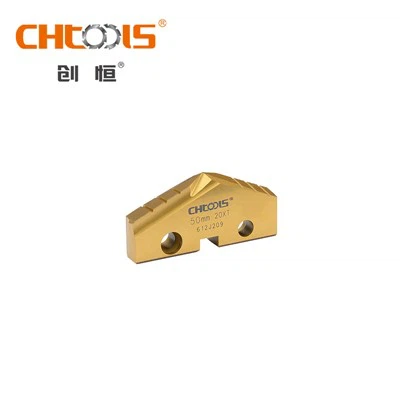
One of the most crucial factors in improving surface finish is choosing the right insert. Spade Drill Insert comes in various shapes, sizes, and materials, each designed for specific applications. For instance, if you're drilling a soft material like aluminum, a sharp - edged insert with a high positive rake angle can reduce cutting forces and produce a smoother surface. On the other hand, when drilling hard materials such as stainless steel, a more robust insert with a negative rake angle might be necessary to withstand the high cutting pressures.
Carbide Insert Of Spade Drill is a popular choice due to its hardness and wear resistance. Carbide inserts can maintain their cutting edge for a longer time, which is essential for consistent surface finish quality. However, they can be brittle, so proper handling and machining parameters are crucial.
Optimizing Cutting Parameters
Cutting parameters play a significant role in determining the surface finish of the drilled holes. The three main cutting parameters are cutting speed, feed rate, and depth of cut.
Cutting Speed: This is the speed at which the drill bit rotates. A higher cutting speed generally results in a better surface finish, but there's a limit. If the cutting speed is too high, it can cause excessive heat generation, which may lead to tool wear, chipping, and a poor surface finish. You need to find the sweet spot based on the material you're drilling and the insert you're using. For example, when drilling mild steel, a cutting speed of around 30 - 60 meters per minute might be appropriate, but for harder materials, you may need to reduce it.
Feed Rate: The feed rate is the rate at which the drill bit advances into the workpiece. A lower feed rate usually produces a smoother surface finish because it allows the insert to remove material more precisely. However, if the feed rate is too low, it can increase the machining time and may cause the insert to rub against the workpiece, resulting in a rough surface. As a rule of thumb, for a good surface finish, you might want to start with a relatively low feed rate and then adjust it based on the results.
Depth of Cut: The depth of cut refers to how much material is removed in a single pass. A smaller depth of cut can lead to a better surface finish as it reduces the cutting forces and the amount of material the insert has to remove at once. But keep in mind that multiple passes with a small depth of cut will increase the machining time.
Coolant and Lubrication
Using the right coolant and lubrication is essential for improving surface finish quality. Coolants help to reduce heat generated during the drilling process, which can prevent tool wear and improve the surface finish. They also flush away the chips from the cutting zone, preventing them from getting re - cut and causing surface defects.
There are different types of coolants available, such as water - based coolants, oil - based coolants, and synthetic coolants. Water - based coolants are popular because they are cost - effective and have good cooling properties. Oil - based coolants, on the other hand, provide better lubrication, which can reduce friction and improve the surface finish, especially when drilling difficult - to - machine materials.
Lubrication can also be achieved through the use of cutting fluids or coatings on the inserts. Some inserts come with special coatings that reduce friction and improve chip evacuation, resulting in a better surface finish.
Machine Rigidity and Stability
The rigidity and stability of the machine used for drilling are often overlooked but are crucial for achieving a good surface finish. A machine that vibrates or has excessive play can cause the drill bit to wander, resulting in an uneven surface finish. Make sure your machine is properly maintained, and the drill bit is securely held in the chuck or tool holder.
Check the machine's spindle runout, which is the amount of deviation from the true center of rotation. Excessive spindle runout can cause the drill bit to cut unevenly, leading to a poor surface finish. If you notice any issues with spindle runout, it's important to have it corrected as soon as possible.
Chip Control
Proper chip control is another key factor in improving surface finish quality. Long, continuous chips can get tangled around the drill bit, causing it to jam and resulting in a rough surface finish. You need to ensure that the chips are broken into small, manageable pieces and are efficiently removed from the cutting zone.
Some Indexable Drills are designed with special chip - breaking features, such as grooves or serrations on the insert. These features help to break the chips into smaller pieces. Additionally, using the right cutting parameters and coolant can also aid in chip control. For example, a higher feed rate can sometimes help to break the chips more effectively.
Inspection and Quality Control
Finally, regular inspection and quality control are essential to ensure that the surface finish quality meets the required standards. You can use various inspection tools, such as surface roughness testers, to measure the surface finish of the drilled holes. If you find that the surface finish is not up to par, you can go back and adjust the cutting parameters, change the insert, or address any other issues.
By implementing these tips, you can significantly improve the surface finish quality of holes drilled by Indexable Drills. Whether you're a small - scale manufacturer or a large - scale production facility, achieving a high - quality surface finish can enhance the performance and appearance of your products.
If you're interested in learning more about Indexable Drills or are looking to purchase high - quality Indexable Drills and inserts, I'd love to have a chat with you. Reach out to me, and we can discuss your specific needs and find the best solutions for your drilling operations.
References
- "Machining Handbook" by Industrial Press Inc.
- "Cutting Tool Engineering" magazine articles on Indexable Drills.