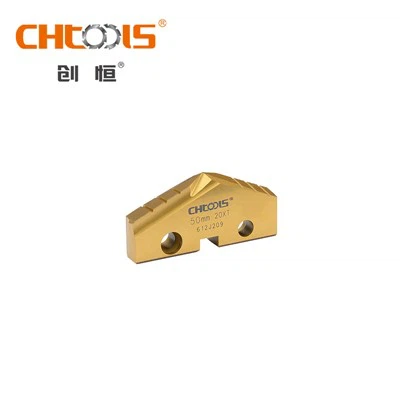
Surface finish quality is a crucial aspect in machining operations, especially when it comes to drilling. As a leading supplier of Spade Drill Insert, I've witnessed firsthand the impact that the right insert can have on the final surface finish of a drilled hole. In this blog, we'll explore the surface finish quality achievable with a spade drill insert and how it can benefit your machining processes.
Understanding Surface Finish Quality
Surface finish quality refers to the texture and smoothness of the machined surface. It is typically measured in terms of roughness, which is the deviation of the surface from its ideal form. A high-quality surface finish is characterized by low roughness, which means the surface is smooth and free of defects.
In drilling operations, the surface finish quality can affect the performance and functionality of the drilled part. For example, a smooth surface finish can reduce friction, improve wear resistance, and enhance the part's aesthetic appeal. On the other hand, a poor surface finish can lead to increased friction, premature wear, and reduced performance.
Factors Affecting Surface Finish Quality with Spade Drill Inserts
Several factors can influence the surface finish quality achievable with a spade drill insert. These include:
Insert Geometry
The geometry of the spade drill insert plays a significant role in determining the surface finish quality. Inserts with sharp cutting edges and proper chip evacuation features can produce a smoother surface finish. For example, inserts with a positive rake angle can reduce cutting forces and improve chip flow, resulting in a better surface finish.
Cutting Parameters
The cutting parameters, such as cutting speed, feed rate, and depth of cut, also have a significant impact on the surface finish quality. Optimal cutting parameters can help minimize cutting forces, reduce tool wear, and improve chip evacuation, leading to a better surface finish. For example, a higher cutting speed can reduce the cutting forces and improve the surface finish, but it may also increase tool wear.
Workpiece Material
The workpiece material can also affect the surface finish quality. Different materials have different machining characteristics, and some materials may be more difficult to machine than others. For example, materials with high hardness or toughness may require different cutting parameters and insert geometries to achieve a good surface finish.
Tool Wear
Tool wear can also have a significant impact on the surface finish quality. As the insert wears, the cutting edges become dull, which can lead to increased cutting forces, poor chip evacuation, and a rough surface finish. Regular tool inspection and replacement can help maintain a good surface finish quality.
Achievable Surface Finish Quality with Spade Drill Inserts
The surface finish quality achievable with a spade drill insert depends on several factors, as mentioned above. However, with the right insert geometry, cutting parameters, and workpiece material, it is possible to achieve a high-quality surface finish.
In general, spade drill inserts can produce a surface finish with a roughness value (Ra) in the range of 0.8 to 3.2 micrometers. This level of surface finish is suitable for many applications, including automotive, aerospace, and general machining.
For applications that require a higher surface finish quality, such as precision machining, it may be necessary to use additional finishing operations, such as honing or grinding. However, using a high-quality spade drill insert can significantly reduce the need for these additional operations, saving time and cost.
Benefits of Using Spade Drill Inserts for Surface Finish Quality
Using spade drill inserts can offer several benefits for achieving a high-quality surface finish. These include:
High Productivity
Spade drill inserts are designed to provide high cutting speeds and feed rates, which can significantly increase productivity. This means that you can drill more holes in less time, reducing production costs and increasing efficiency.
Improved Tool Life
Spade drill inserts are made from high-quality carbide materials, which offer excellent wear resistance. This means that the inserts can last longer, reducing the need for frequent tool changes and increasing productivity.
Consistent Surface Finish
Spade drill inserts are designed to provide a consistent surface finish, which is essential for many applications. This means that you can achieve the same high-quality surface finish on every hole, reducing the need for additional finishing operations.
Versatility
Spade drill inserts can be used for a wide range of applications, including drilling in various materials, such as steel, aluminum, and cast iron. This means that you can use the same insert for different applications, reducing the need for multiple tools and increasing flexibility.
Conclusion
In conclusion, the surface finish quality achievable with a spade drill insert depends on several factors, including insert geometry, cutting parameters, workpiece material, and tool wear. With the right insert and cutting parameters, it is possible to achieve a high-quality surface finish that meets the requirements of many applications.


As a supplier of Spade Drill Insert, I can offer you a wide range of high-quality inserts that are designed to provide excellent surface finish quality. Our inserts are made from high-quality carbide materials and are available in a variety of geometries and sizes to meet your specific needs.
If you're interested in learning more about our spade drill inserts or have any questions about surface finish quality, please don't hesitate to contact us. We'd be happy to help you find the right insert for your application and provide you with the support you need to achieve the best possible surface finish quality.
References
- Boothroyd, G., & Knight, W. A. (2006). Fundamentals of machining and machine tools. CRC press.
- Kalpakjian, S., & Schmid, S. R. (2014). Manufacturing engineering and technology. Pearson.
- Trent, E. M., & Wright, P. K. (2000). Metal cutting. Butterworth-Heinemann.