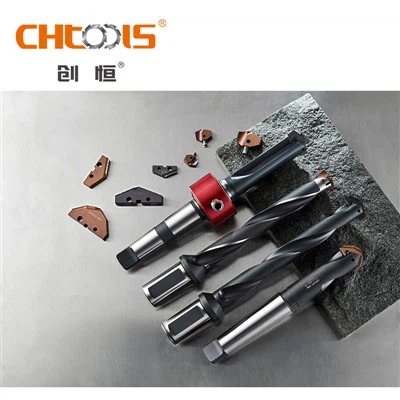
As a supplier specializing in BTA Deep Drilling solutions, I've witnessed firsthand the critical role that lubrication plays in this advanced machining process. BTA Deep Drilling, also known as Boring and Trepanning Association drilling, is a highly efficient method for creating deep holes with high precision and excellent surface finish. In this blog, I'll delve into the various aspects of lubrication in BTA Deep Drilling and explain why it's an indispensable element of the process.
The Basics of BTA Deep Drilling
Before we explore the role of lubrication, let's briefly review the fundamentals of BTA Deep Drilling. This process involves using a specialized drill bit, known as a BTA Deep Hole Cutter, which has a unique design that allows for the efficient removal of chips and the delivery of coolant to the cutting edge. The drill bit is typically mounted on a spindle and is fed into the workpiece at a controlled rate while rotating at high speeds. The chips generated during the drilling process are flushed out of the hole by the coolant, which is pumped under high pressure through the drill bit.
BTA Deep Drilling offers several advantages over conventional drilling methods, including the ability to create deep holes with a high aspect ratio (the ratio of the hole depth to its diameter), excellent straightness and roundness, and a smooth surface finish. These advantages make BTA Deep Drilling ideal for a wide range of applications, including the manufacturing of automotive components, aerospace parts, and hydraulic cylinders.
The Role of Lubrication in BTA Deep Drilling
Lubrication plays a crucial role in BTA Deep Drilling, serving several important functions that are essential for the success of the process. Here are some of the key roles of lubrication in BTA Deep Drilling:
Cooling
One of the primary functions of lubrication in BTA Deep Drilling is to dissipate the heat generated during the cutting process. The friction between the drill bit and the workpiece, as well as the deformation of the material being cut, generates a significant amount of heat. If this heat is not properly managed, it can cause the drill bit to overheat, leading to premature wear and failure. Additionally, excessive heat can also cause the workpiece to expand, which can affect the accuracy of the hole and the surface finish.
The lubricant acts as a coolant, absorbing the heat generated during cutting and carrying it away from the cutting zone. This helps to maintain a stable temperature in the cutting zone, reducing the wear on the drill bit and improving the quality of the hole. The lubricant also helps to prevent the formation of built-up edge, which is a common problem in metal cutting that can cause poor surface finish and reduced tool life.
Chip Removal
Another important role of lubrication in BTA Deep Drilling is to facilitate the removal of chips from the hole. As the drill bit cuts through the workpiece, it generates chips that need to be removed from the hole to prevent them from interfering with the cutting process. The lubricant helps to flush the chips out of the hole by providing a high-pressure stream of coolant that carries the chips away from the cutting zone.
The lubricant also helps to prevent the chips from sticking to the drill bit and the workpiece, which can cause clogging and reduce the efficiency of the drilling process. By keeping the chips moving and preventing them from accumulating in the hole, the lubricant ensures that the drill bit can continue to cut smoothly and efficiently.
Reducing Friction
Lubrication also helps to reduce the friction between the drill bit and the workpiece, which can improve the efficiency of the drilling process and reduce the wear on the drill bit. The lubricant forms a thin film between the drill bit and the workpiece, which acts as a barrier to prevent direct contact between the two surfaces. This reduces the friction and wear on the drill bit, allowing it to cut more smoothly and efficiently.
Reducing friction also helps to improve the surface finish of the hole. When the drill bit cuts through the workpiece with less friction, it produces a smoother surface finish, which is important for many applications. Additionally, reducing friction can also help to reduce the power consumption of the drilling machine, which can lead to cost savings over time.
Corrosion Protection
Finally, lubrication also provides corrosion protection for the drill bit and the workpiece. The coolant used in BTA Deep Drilling typically contains additives that help to prevent corrosion and rusting. These additives form a protective film on the surface of the drill bit and the workpiece, which helps to prevent the formation of corrosion and rust.
Corrosion and rust can cause damage to the drill bit and the workpiece, reducing their lifespan and affecting the quality of the hole. By providing corrosion protection, the lubricant helps to ensure that the drill bit and the workpiece remain in good condition and can continue to perform effectively over a long period of time.
Choosing the Right Lubricant for BTA Deep Drilling
Choosing the right lubricant for BTA Deep Drilling is crucial for ensuring the success of the process. There are several factors to consider when selecting a lubricant, including the type of material being drilled, the drilling conditions, and the specific requirements of the application.
Here are some of the key factors to consider when choosing a lubricant for BTA Deep Drilling:
Material Compatibility
The lubricant should be compatible with the material being drilled. Different materials have different properties and require different types of lubricants. For example, drilling through stainless steel may require a lubricant that is specifically formulated for use with stainless steel, while drilling through aluminum may require a lubricant that is designed for use with aluminum.
Cooling Capacity
The lubricant should have sufficient cooling capacity to dissipate the heat generated during the cutting process. The cooling capacity of the lubricant depends on several factors, including its thermal conductivity, specific heat capacity, and flow rate. A lubricant with a high cooling capacity can help to prevent the drill bit from overheating and improve the quality of the hole.
Chip Removal Ability
The lubricant should have good chip removal ability to ensure that the chips are effectively flushed out of the hole. The chip removal ability of the lubricant depends on its viscosity, surface tension, and flow rate. A lubricant with a low viscosity and high flow rate can help to carry the chips away from the cutting zone more effectively.
Lubricity
The lubricant should have good lubricity to reduce the friction between the drill bit and the workpiece. The lubricity of the lubricant depends on its chemical composition and the presence of additives. A lubricant with good lubricity can help to improve the efficiency of the drilling process and reduce the wear on the drill bit.
Corrosion Protection
The lubricant should provide adequate corrosion protection for the drill bit and the workpiece. The corrosion protection ability of the lubricant depends on the presence of additives that help to prevent corrosion and rusting. A lubricant with good corrosion protection can help to ensure that the drill bit and the workpiece remain in good condition and can continue to perform effectively over a long period of time.
Conclusion
In conclusion, lubrication plays a critical role in BTA Deep Drilling, serving several important functions that are essential for the success of the process. From cooling and chip removal to reducing friction and providing corrosion protection, the lubricant is an indispensable element of BTA Deep Drilling.
As a supplier of BTA Deep Drilling solutions, we understand the importance of choosing the right lubricant for your specific application. We offer a wide range of high-quality lubricants that are specifically formulated for use in BTA Deep Drilling. Our lubricants are designed to provide excellent cooling, chip removal, lubricity, and corrosion protection, ensuring that your drilling process runs smoothly and efficiently.


If you're interested in learning more about our BTA Deep Drilling solutions or our lubricants, please don't hesitate to [contact us for procurement and further discussions]. We'd be happy to help you find the right solution for your needs.
References
- Smith, J. (2019). Deep Hole Drilling: Principles and Practices. Industrial Press.
- Brown, A. (2020). Lubrication in Metal Cutting Processes. Journal of Manufacturing Science and Engineering.
- Johnson, R. (2021). Advances in BTA Deep Drilling Technology. International Journal of Machine Tools and Manufacture.