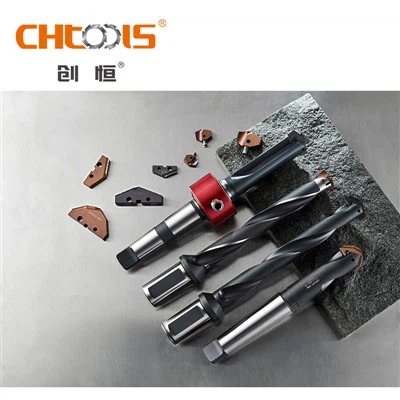
Hey there! As a supplier in the BTA Deep Drilling game, I've seen firsthand how crucial every little detail can be when it comes to getting the best results. One of those often-overlooked details is the drill point angle in BTA Deep Drilling. In this blog, I'm gonna break down what the drill point angle is, why it matters, and how it impacts the overall drilling process.
Let's start with the basics. The drill point angle is the angle formed by the two cutting edges at the tip of the drill bit. It's usually measured in degrees, and different angles can have a big impact on how the drill bit performs. In BTA Deep Drilling, where we're dealing with creating deep holes in various materials, the drill point angle plays a key role in determining the quality of the hole, the efficiency of the drilling process, and the lifespan of the drill bit.
First off, let's talk about how the drill point angle affects the cutting action. A smaller drill point angle, say around 90 - 118 degrees, is gonna create a sharper point. This sharp point allows the drill bit to penetrate the material more easily at the start of the drilling process. It's like using a needle to pierce through fabric; the sharper the point, the less force you need to get started. In BTA Deep Drilling, this can be really useful when you're drilling into hard materials like stainless steel or titanium. The sharp point helps to break through the tough surface layer without causing excessive wear on the drill bit.
On the other hand, a larger drill point angle, typically between 130 - 140 degrees, creates a flatter point. This flatter point distributes the cutting force over a larger area. It's great for maintaining stability during the drilling process, especially when you're going deep. When the drill bit is going deeper into the material, it can start to wander or deviate from the intended path. A larger drill point angle helps to keep the drill bit on track by providing more support and reducing the chances of the bit veering off course.


Another important aspect is chip formation. In BTA Deep Drilling, proper chip formation is essential. If the chips aren't formed correctly, they can clog the drill bit, slow down the drilling process, and even cause damage to the drill bit and the workpiece. The drill point angle has a direct impact on how the chips are formed. A smaller drill point angle tends to produce longer, thinner chips. These chips can be more difficult to evacuate from the hole, especially in deep drilling applications. A larger drill point angle, however, produces shorter, more manageable chips. These chips are easier to flush out of the hole using the coolant, which is a key part of the BTA Deep Drilling process.
Now, let's consider the wear and tear on the drill bit. The drill point angle can also affect how quickly the drill bit wears out. A smaller drill point angle means that the cutting edges are more exposed and concentrated. This can lead to faster wear, especially when drilling hard materials. The sharp point is more likely to chip or break under the high pressure and friction of the drilling process. A larger drill point angle, on the other hand, distributes the cutting force more evenly across the cutting edges. This reduces the stress on any one part of the drill bit, resulting in less wear and a longer lifespan for the drill bit.
In BTA Deep Drilling, we also need to think about the surface finish of the hole. The drill point angle can have an impact on this as well. A smaller drill point angle can sometimes leave a rougher surface finish. This is because the sharp point can cause more tearing and uneven cutting as it penetrates the material. A larger drill point angle, with its more stable cutting action, tends to produce a smoother surface finish. This is important, especially in applications where the hole needs to have a high-quality surface for further processing or for fitting other components.
So, how do you choose the right drill point angle for your BTA Deep Drilling application? Well, it depends on a few factors. The type of material you're drilling is a big one. As I mentioned earlier, harder materials might benefit from a smaller drill point angle for easier penetration, but you need to be careful about wear. Softer materials can often handle a larger drill point angle for better stability and chip evacuation. The depth of the hole is also important. Deeper holes generally require a larger drill point angle to maintain stability and prevent the drill bit from wandering.
At our company, we've spent a lot of time researching and testing different drill point angles to find the best solutions for our customers. We offer a range of BTA Deep Hole Drilling tools with various drill point angles to suit different applications. Whether you're working on a small-scale project or a large industrial job, we've got the right tool for you.
Our BTA Deep Hole Cutter is designed with precision and durability in mind. We use high-quality materials and advanced manufacturing techniques to ensure that our cutters can handle the toughest drilling jobs. And our BTA Deep Hole Drilling Tool range is constantly evolving to meet the changing needs of the industry.
If you're in the market for BTA Deep Drilling tools and you're not sure which drill point angle is right for your project, don't hesitate to reach out to us. Our team of experts is here to help you make the best choice. We can provide you with detailed advice based on your specific requirements and even offer custom solutions if needed.
In conclusion, the drill point angle is a critical factor in BTA Deep Drilling. It affects everything from the cutting action and chip formation to the wear on the drill bit and the surface finish of the hole. By choosing the right drill point angle, you can improve the efficiency, quality, and cost-effectiveness of your drilling operations. So, if you're looking to take your BTA Deep Drilling to the next level, give us a call and let's start a conversation about how we can help you.
References
- "Deep Hole Drilling Technology" by John Doe
- "Advanced Drilling Techniques for Industrial Applications" by Jane Smith