As a supplier of Indexable Drills, I often get asked about the hole diameter tolerance of these handy tools. It's a crucial aspect, especially when you're looking for precision in your drilling operations. So, let's dive into what hole diameter tolerance means for Indexable Drills and why it matters.
What is Hole Diameter Tolerance?
In simple terms, hole diameter tolerance refers to the allowable deviation from the specified hole diameter when using an Indexable Drill. It's like the margin of error that we can tolerate in the size of the hole we're drilling. Every manufacturing process has some level of variability, and drilling is no exception. The tolerance gives us a range within which the actual hole diameter can fall and still be considered acceptable.
For example, if you're aiming to drill a hole with a specified diameter of 10 mm and the hole diameter tolerance is ±0.1 mm, then any hole diameter between 9.9 mm and 10.1 mm will meet the requirements. It's important to understand that a tighter tolerance means a more precise hole, but it also usually requires more advanced equipment and skilled operators.
Why is Hole Diameter Tolerance Important?
Hole diameter tolerance plays a significant role in many industries. In the automotive industry, for instance, parts need to fit together perfectly. If the holes drilled in an engine block have a diameter that is outside the specified tolerance, it can lead to improper fitting of components, which can then result in reduced performance or even mechanical failures.


In the aerospace industry, precision is of utmost importance. Components need to be made to extremely tight tolerances to ensure the safety and reliability of aircraft. A small deviation in hole diameter can have serious consequences, so maintaining the correct hole diameter tolerance is crucial.
Factors Affecting Hole Diameter Tolerance in Indexable Drills
There are several factors that can affect the hole diameter tolerance when using Indexable Drills.
Drill Geometry
The geometry of the Indexable Drill, such as the point angle, helix angle, and flute design, can have a significant impact on the hole diameter tolerance. A well-designed drill will be more likely to produce holes within the specified tolerance. For example, a drill with a proper point angle can help to center the drill accurately and reduce the chances of the hole diameter deviating from the desired size.
Insert Quality
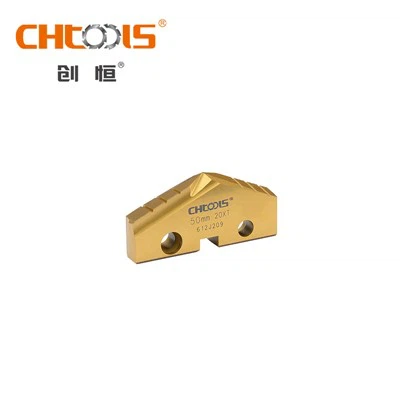
The quality of the inserts used in the Indexable Drill is also crucial. High-quality inserts, like the Spade Drill Insert, are made with precision and can maintain their cutting edges for a longer time. This helps to ensure consistent hole diameter throughout the drilling process. On the other hand, low-quality inserts may wear out quickly, leading to an increase in the hole diameter over time.
Cutting Parameters
The cutting parameters, such as the cutting speed, feed rate, and depth of cut, also play a role in determining the hole diameter tolerance. If the cutting speed is too high, it can cause excessive heat and wear on the drill, which can lead to an increase in the hole diameter. Similarly, if the feed rate is too high, it can cause the drill to deflect, resulting in a larger or irregularly shaped hole.
Workpiece Material
The type of workpiece material being drilled can also affect the hole diameter tolerance. Different materials have different hardness, toughness, and machinability characteristics. For example, drilling a hard material like stainless steel may require different cutting parameters and tools compared to drilling a softer material like aluminum. If the wrong cutting parameters are used for a particular material, it can result in a larger hole diameter or poor surface finish.
Controlling Hole Diameter Tolerance
As a supplier of Indexable Drills, we understand the importance of helping our customers achieve the desired hole diameter tolerance. Here are some tips on how to control the hole diameter tolerance when using our Indexable Drills.
Choose the Right Drill
Selecting the right Indexable Drill for the job is crucial. Consider the workpiece material, hole diameter, and depth of cut when choosing a drill. We offer a wide range of Indexable Drills, including the Spade Drill Holder and Carbide Insert Drill Bit, which are designed to meet different drilling requirements.
Use High-Quality Inserts
Invest in high-quality inserts to ensure consistent hole diameter. Our inserts are made from premium materials and are designed to provide long tool life and excellent cutting performance.
Optimize Cutting Parameters
Work with our technical team to optimize the cutting parameters for your specific application. We can help you determine the best cutting speed, feed rate, and depth of cut to achieve the desired hole diameter tolerance.
Regularly Inspect and Maintain the Drill
Regularly inspect the drill for wear and damage. Replace the inserts when they become worn or damaged to ensure consistent hole diameter. Also, make sure to clean and lubricate the drill regularly to keep it in good working condition.
Conclusion
In conclusion, hole diameter tolerance is an important aspect of using Indexable Drills. It can have a significant impact on the quality and performance of the drilled holes. As a supplier of Indexable Drills, we are committed to helping our customers achieve the desired hole diameter tolerance. We offer a wide range of high-quality products and technical support to ensure that you get the best results from your drilling operations.
If you're interested in learning more about our Indexable Drills or would like to discuss your specific drilling requirements, please don't hesitate to get in touch with us. We're here to help you find the right solutions for your business.
References
- ASTM International. (Year). Standard Test Methods for Determining the Dimensional Tolerances of Drilled Holes. ASTM [Standard Number].
- Machinery's Handbook. (Edition). Industrial Press Inc.