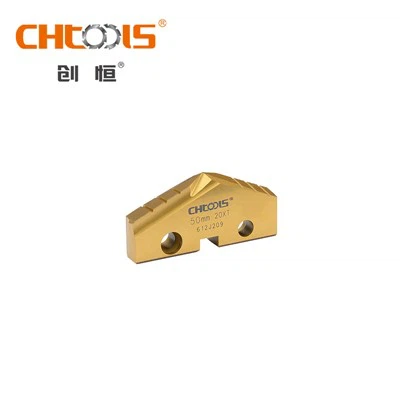
Hey there! As a supplier of solid rail cutters, I've often been asked about the heat generation during the cutting process of these nifty tools. So, let's dive right in and explore what's going on when a solid rail cutter gets to work.
First off, what exactly is a solid rail cutter? Well, we offer two main types: the HSS Integral Type Solid Rail Cutter and the HSS Split Type Solid Rail Cutter. These cutters are designed to slice through rails with precision, but they generate a fair amount of heat in the process.
The Basics of Heat Generation
When a solid rail cutter starts cutting, it's like a mini battlefield between the cutter and the rail. The cutter's teeth dig into the rail, and as they do, friction is created. Friction is the main culprit behind heat generation. You know how when you rub your hands together really fast, they start to get warm? It's the same principle here, but on a much larger and more intense scale.
The amount of heat generated depends on several factors. One of the most important ones is the cutting speed. If the cutter is spinning too fast, it'll create more friction and thus more heat. On the other hand, if it's too slow, it might not cut efficiently, and you'll end up with uneven cuts and potentially more heat in the long run.
Another factor is the material of the rail. Different types of rails are made from different materials, and some are harder to cut than others. Harder materials require more force to cut through, which means more friction and more heat. For example, a high - strength alloy rail will generate more heat compared to a standard carbon steel rail.
The design of the cutter also plays a role. Our HSS Integral Type Solid Rail Cutter is made in one piece, which gives it great strength and durability. However, this design can sometimes lead to more heat build - up because there's less room for heat to dissipate. In contrast, the HSS Split Type Solid Rail Cutter has a split design that allows for better heat dissipation, but it might not be as strong in some heavy - duty applications.
The Effects of Heat
So, what happens when there's too much heat during the cutting process? Well, it can have some pretty negative effects on both the cutter and the rail.
For the cutter, excessive heat can cause the cutting edges to lose their hardness. You see, the high - speed steel (HSS) that our cutters are made of has a specific hardness that allows it to cut through the rail. But when the temperature gets too high, the steel can start to soften. This means the cutter won't be able to cut as effectively, and it'll wear out much faster. You might find yourself having to replace the cutter more often, which can be a real pain in the pocket.
On the rail, the heat can cause the material to change its properties. It can create a heat - affected zone (HAZ) around the cut area. In this zone, the rail's structure might become weaker, and it could be more prone to cracking or other forms of damage. This is a big deal, especially in applications where the rail needs to be in top - notch condition, like in railway tracks.
Controlling Heat Generation
Now, the good news is that there are ways to control heat generation during the cutting process. One of the most common methods is using coolant. Coolant is like a magic potion that helps to keep the temperature down. It can be in the form of a liquid or a mist. When you spray the coolant on the cutting area, it absorbs the heat and carries it away. This not only helps to protect the cutter and the rail but also improves the cutting quality.
Another way is to optimize the cutting parameters. As I mentioned earlier, the cutting speed is crucial. You need to find the sweet spot where the cutter is cutting efficiently without generating too much heat. The feed rate, which is how fast the cutter moves through the rail, also matters. A proper combination of cutting speed and feed rate can go a long way in reducing heat.
Regular maintenance of the cutter is also important. If the cutter's teeth are dull, it'll have to work harder to cut through the rail, which means more heat. So, make sure to sharpen the cutter regularly or replace it when it's worn out.
Our Solid Rail Cutters and Heat Management
At our company, we've put a lot of effort into designing our solid rail cutters to handle heat effectively. Our HSS Integral Type Solid Rail Cutter is made with high - quality HSS that can withstand high temperatures to a certain extent. We've also used advanced manufacturing techniques to ensure that the cutter has a good balance between strength and heat dissipation.
The HSS Split Type Solid Rail Cutter, on the other hand, is a great option for applications where heat dissipation is a top priority. Its split design allows for better airflow around the cutting area, which helps to keep the temperature down.


We're constantly researching and developing new ways to improve our cutters' heat management capabilities. We work closely with our customers to understand their specific needs and come up with solutions that work best for them.
Conclusion
So, there you have it! The heat generation during the cutting process of a solid rail cutter is a complex but important topic. It's something that every user of solid rail cutters should be aware of. By understanding the factors that contribute to heat generation, the effects of heat, and how to control it, you can ensure that your cutting operations are efficient, cost - effective, and produce high - quality results.
If you're in the market for a solid rail cutter or have any questions about heat generation and how our cutters can handle it, don't hesitate to reach out. We're here to help you find the perfect solution for your needs. Whether you're a small - scale workshop or a large - scale industrial operation, we've got the right solid rail cutter for you. Let's start a conversation and see how we can work together to make your cutting tasks easier and more efficient.
References
- "Metal Cutting Principles" by Paul De Garmo, J T Black, and Ronald Kohser.
- "Manufacturing Engineering and Technology" by S. Kalpakjian and S. Schmid.