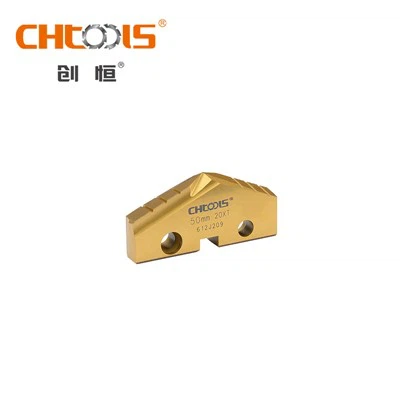
In the realm of machining and cutting operations, the spade drill insert plays a crucial role. As a reliable spade drill insert supplier, understanding the significance of chip evacuation performance is of utmost importance. In this blog, we will delve into what chip evacuation performance of a spade drill insert is, why it matters, and how it impacts the overall machining process.
What is Chip Evacuation?
Chip evacuation refers to the process of removing the chips generated during the cutting operation from the cutting zone. When a spade drill insert is used to penetrate a workpiece, it shears off material in the form of chips. These chips need to be efficiently removed from the cutting area to ensure smooth and effective machining. If the chips are not evacuated properly, they can cause a variety of problems, such as increased cutting forces, poor surface finish, tool wear, and even tool breakage.


Importance of Chip Evacuation Performance for Spade Drill Inserts
1. Reducing Cutting Forces
When chips accumulate in the cutting zone, they can create additional resistance to the cutting action of the spade drill insert. This leads to increased cutting forces, which not only require more power from the machining equipment but also put extra stress on the drill insert and the workpiece. By ensuring good chip evacuation, the cutting forces can be kept at an optimal level, reducing the load on the machine and the tool, and improving the overall efficiency of the cutting process.
2. Improving Surface Finish
Proper chip evacuation helps to prevent chips from getting trapped between the drill insert and the workpiece surface. When chips are not removed promptly, they can scratch or score the machined surface, resulting in a poor surface finish. A spade drill insert with good chip evacuation performance can produce a smoother and more accurate surface finish, which is often a critical requirement in many machining applications, such as aerospace and automotive manufacturing.
3. Extending Tool Life
Chips that remain in the cutting zone can cause excessive heat generation due to friction. High temperatures can accelerate tool wear, reducing the lifespan of the spade drill insert. Effective chip evacuation helps to dissipate heat from the cutting area, keeping the temperature within a reasonable range and minimizing tool wear. This means that the spade drill insert can be used for a longer period before it needs to be replaced, reducing the overall machining costs.
Factors Affecting Chip Evacuation Performance
1. Geometry of the Spade Drill Insert
The design of the spade drill insert has a significant impact on chip evacuation. Features such as chip breakers, flute shape, and rake angle can all influence how the chips are formed and removed from the cutting zone. For example, well-designed chip breakers can help to break the long, continuous chips into smaller, more manageable pieces, making them easier to evacuate. The shape and size of the flutes determine the path for the chips to flow out of the cutting area. A larger flute area generally provides better chip evacuation, but it also needs to be balanced with the strength of the drill insert. The rake angle affects the cutting action and chip formation. A positive rake angle can reduce the cutting forces and promote better chip evacuation, but it may also reduce the tool's strength.
2. Cutting Parameters
The cutting parameters, such as cutting speed, feed rate, and depth of cut, also play a crucial role in chip evacuation. Higher cutting speeds generally result in smaller chips, but they can also increase the heat generation. The feed rate determines the thickness of the chips. A proper feed rate should be selected to ensure that the chips are of an appropriate size for easy evacuation. The depth of cut affects the amount of material removed per pass and can also influence the chip formation and evacuation. If the depth of cut is too large, it may be more difficult to evacuate the chips.
3. Coolant and Lubrication
The use of coolant and lubrication can significantly improve chip evacuation performance. Coolant helps to reduce the temperature in the cutting zone, preventing the chips from sticking to the drill insert and the workpiece. It also provides a flushing action, helping to carry the chips out of the cutting area. Lubrication can reduce the friction between the drill insert and the workpiece, further improving the chip evacuation process. Different types of coolants and lubricants are available, and the choice depends on the specific machining application and the material being cut.
Evaluating Chip Evacuation Performance
To evaluate the chip evacuation performance of a spade drill insert, several methods can be used. One common method is to visually inspect the chips after the cutting operation. If the chips are short, well - broken, and smoothly evacuated from the cutting area, it indicates good chip evacuation performance. On the other hand, long, continuous chips or chips that are clogged in the flutes suggest poor chip evacuation.
Another way is to measure the cutting forces and the surface finish of the machined workpiece. If the cutting forces are stable and within the expected range, and the surface finish is satisfactory, it is likely that the chip evacuation is working well. Additionally, monitoring the tool wear can also provide insights into the chip evacuation performance. Excessive or uneven tool wear may be a sign of poor chip evacuation.
Our High - Performance Spade Drill Inserts
As a leading spade drill insert supplier, we are committed to providing products with excellent chip evacuation performance. Our Carbide Insert Of Spade Drill is designed with advanced chip breaker technology, which effectively breaks the chips into small, easily evacuable pieces. The carefully designed flute geometry ensures smooth chip flow out of the cutting area.
We also offer Spade Drill Holder that is optimized for use with our spade drill inserts. The combination of the high - quality insert and the well - designed holder provides a reliable solution for various machining applications. Our Best Indexable Drill is another product that features outstanding chip evacuation performance, allowing for efficient and accurate drilling operations.
Conclusion
The chip evacuation performance of a spade drill insert is a critical factor in the success of machining operations. It affects cutting forces, surface finish, and tool life. By understanding the factors that influence chip evacuation and evaluating it effectively, manufacturers can choose the right spade drill inserts for their specific applications.
If you are looking for high - quality spade drill inserts with excellent chip evacuation performance, we are here to help. Contact us to discuss your requirements and start a procurement negotiation. We are confident that our products will meet your expectations and improve your machining efficiency.
References
- Smith, J. (2018). Machining Handbook. Industrial Press.
- Brown, A. (2020). Cutting Tool Technology. McGraw - Hill.
- Johnson, R. (2019). Chip Formation and Evacuation in Drilling Operations. Journal of Manufacturing Science and Engineering.