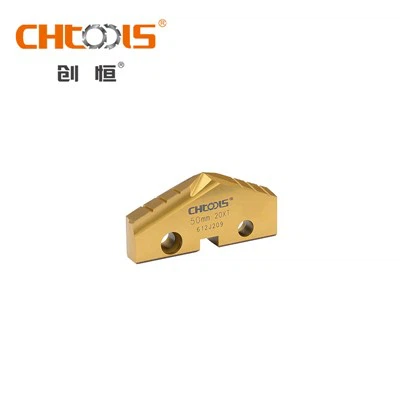
If you’ve ever spent hours wrestling with a standard twist drill bit, dealing with wandering bits, chip jams, or endless post-drilling deburring, you know how frustrating small, inefficient cutting tools can be. As a supplier of annular cutters, I’ve spent the last decade talking to metal fabricators, construction crews, maintenance technicians, and oil and gas pipeline workers about their biggest pain points—and the tool that consistently solves most of them is the annular cutter, also called a core drill or ring cutter. What makes this tool stand out from traditional twist drills isn’t just a minor design tweak; it’s a set of engineering advantages that make it faster, cleaner, and more cost-effective for nearly every metal cutting task. Let’s break down the key advantages of using an annular cutter, and why it might be the upgrade your workshop or job site has been missing.
First, let’s start with speed, because for most tradespeople, time is money. Traditional twist drills remove material in a full solid cylinder, which means you’re cutting through every bit of metal along the entire width of the drill flutes. An annular cutter, by contrast, only cuts a ring-shaped annulus around the edge of the hole, leaving a solid core of metal in the center. That means it’s removing far less material to create the same size hole—sometimes 70% less, according to machining industry data. To put that in practical terms: if you’re drilling a 1-inch hole through 2 inches of steel, a twist drill will remove 1.57 cubic inches of metal, while an annular cutter will only remove 0.47 cubic inches. Less material to cut means less friction, less heat buildup, and faster cutting speeds. For example, drilling that same 2-inch deep hole in mild steel with a twist drill might take 10 to 15 minutes, depending on your drill’s power, while an annular cutter can do it in 1 to 2 minutes. That speed doesn’t just save time on each hole—it also reduces wear and tear on your drill. A twist drill has to work harder to push through solid metal, generating more stress on the drill’s chuck, motor, and bearings. An annular cutter’s design means it only engages the outer edge of the hole, so it requires less torque to drill, protecting your equipment and extending its lifespan. If you’re using a mag drill (also known as a magnetic drill press, the most common tool for annular cutters), pairing it with the right cutter makes this speed even more noticeable. Our Mag Drill Cutter line, for example, is engineered to run smoothly at those higher speeds without causing chatter or inconsistent cuts, making it ideal for high-volume jobs like fabricating structural steel or drilling multiple holes in pipeline joints.
Next, there’s precision and hole quality—two things that non-negotiable for tradespeople, whether you’re drilling holes for bolts that need to fit perfectly or creating smooth, burr-free holes that won’t require hours of post-processing. Twist drills are prone to wandering, especially on hard or thick metal; if the bit isn’t perfectly centered, it can slip across the surface, leaving an off-center hole that wastes material and requires rework. Annular cutters, however, have a central pilot pin that guides the cutter exactly where you want it, eliminating wandering entirely. That pilot pin sits in a small pre-drilled indent or even a scratch you make on the metal surface, so the hole starts perfectly aligned and stays on track, even on curved or uneven surfaces like I-beams or pipe walls. But precision isn’t just about alignment—it’s about the finish of the hole itself. Because annular cutters remove only the outer ring, they cut with a shearing action rather than the scraping action of a twist drill. That shearing leaves a much smoother inner hole wall, with minimal heat distortion on the metal surface around the hole. Heat distortion is a big issue with twist drills: the high friction from cutting solid metal can raise the temperature of the drill bit and the metal, hardening the edge of the workpiece around the hole and making it harder to thread or fit bolts. Annular cutters run cooler, reducing that heat-affected zone (HAZ) by up to 80% in some cases. Another huge benefit here is that annular cutters produce very thin, tight chips instead of the long, tangled ribbon chips that come from twist drills. Those ribbon chips can get jammed in the drill flutes, requiring you to stop every few seconds to clear them—wasting more time and even posing a safety risk if they snap and fly. Annular cutter chips are small, manageable, and easy to evacuate, so you can drill multiple holes in a row without stopping. Our HSS Annular Cutter Drill Bit range, for example, is designed with specialized flute geometry that keeps chips flowing smoothly, even in hard stainless steel or alloy metal.
Then there’s versatility. Annular cutters aren’t one-size-fits-all, and they can be adapted to fit nearly every cutting task you might encounter. First, they come in two main material types, each suited for different jobs: High-Speed Steel (HSS) and Tungsten Carbide Tipped (TCT). HSS annular cutters are durable, flexible, and ideal for drilling through mild steel, aluminum, and non-ferrous metals at lower cost. TCT annular cutters, on the other hand, have tips made of tungsten carbide—one of the hardest materials on earth—that can cut through much harder materials like stainless steel, cast iron, and even hardened tool steel, making them perfect for heavy industrial jobs. Our Tungsten Carbide Tipped Annular Cutter line, for example, is designed to last 10 to 20 times longer than HSS cutters when drilling hard metals, which means fewer cutter changes and more consistent productivity. Beyond material type, annular cutters come in different shank styles to fit different drill types. If you’re using a mag drill, standard drill press, or even a hand-held drill, there’s an annular cutter that will fit. For example, our HSS Annular Cutter with Fein Quick In Shank is designed to work seamlessly with Fein mag drills, letting you swap cutters in seconds without tools— a huge time-saver when you’re switching between hole sizes mid-job. Annular cutters also come in different lengths, so you can drill deep holes without having to use multiple drill bits or extensions. Standard annular cutters drill holes up to 1.5 inches deep, while long-length cutters can go up to 6 inches or more, making them perfect for drilling through thick structural steel or pipe walls that are too deep for twist drills.
Cost-effectiveness is another major advantage, and it’s one that often surprises people when they first switch from twist drills to annular cutters. While a single annular cutter might cost a bit more upfront than a twist drill bit of the same hole size, the longevity and reduced downtime more than make up for that difference. As I mentioned earlier, annular cutters last far longer than twist drills. A high-quality annular cutter can drill hundreds or even thousands of holes before it needs to be sharpened or replaced, while a twist drill bit might only last a dozen holes in hard metal before it dulls. For high-volume jobs, that adds up quickly: if you’re drilling 1000 holes in structural steel, one TCT annular cutter might be all you need, whereas you’d go through 10 or more twist drill bits. Add in the time you save from faster drilling and fewer interruptions for clearing chips or changing bits, and the cost savings become even greater. A 2022 study by the Fabricators & Manufacturers Association (FMA) found that fabricators using annular cutters reduced their drilling-related labor costs by an average of 35% compared to those using twist drills, due to fewer rework hours and faster project turnaround. Annular cutters also reduce material waste: because they remove less metal, you have less scrap metal to dispose of, and the clean, accurate holes mean fewer parts get rejected due to misalignment or poor finish. That’s a big deal for construction and metal fabrication, where scrap metal costs can add up to thousands of dollars on a single job.
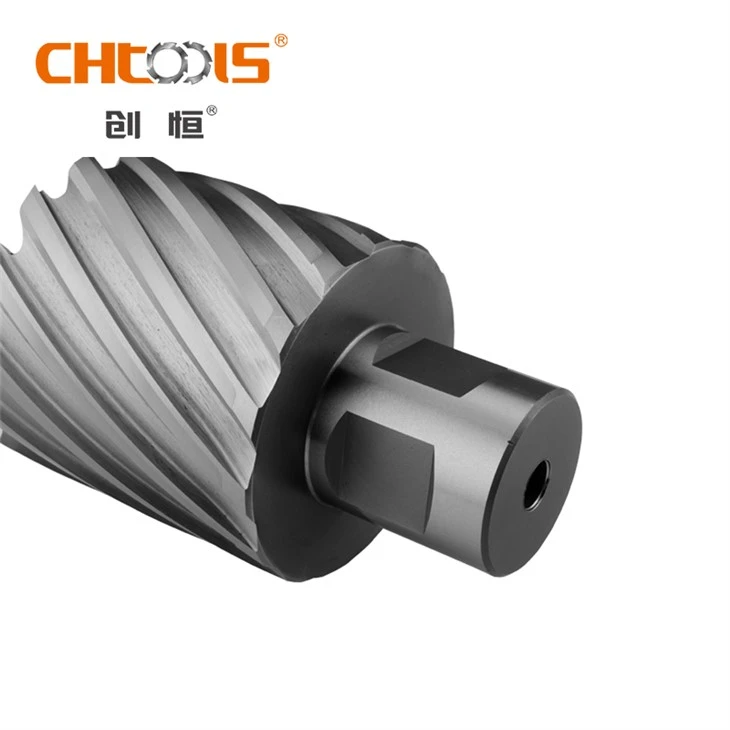
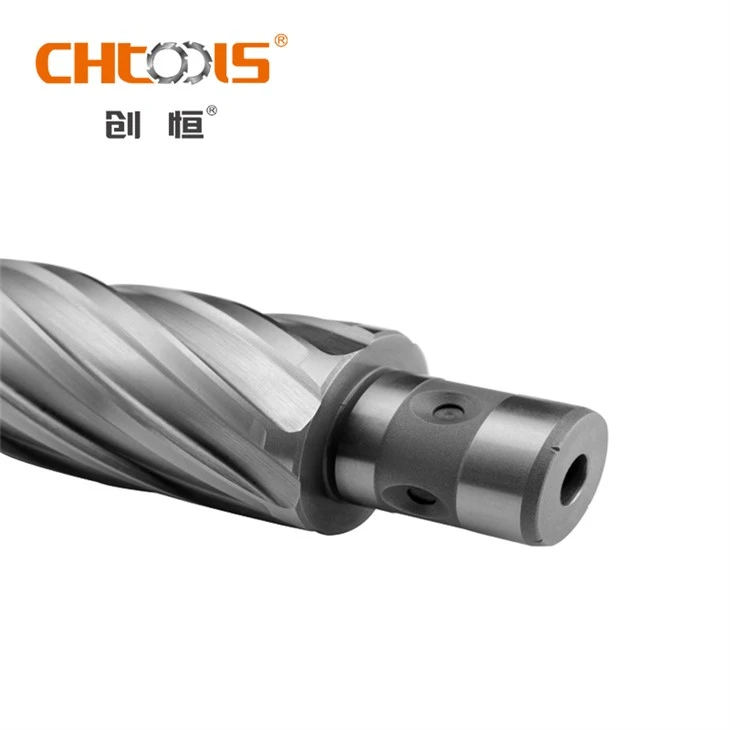
Safety is often overlooked when talking about cutting tools, but it’s a critical advantage of annular cutters, especially on busy job sites. Twist drills generate a lot of torque, especially when drilling hard metal, and there’s a risk of the bit grabbing and kicking back—something that can cause serious injury if you’re not holding the drill firmly. Annular cutters require less torque to drill, so the risk of kickback is significantly lower. The central pilot pin also helps keep the drill stable during cutting, reducing the chance of slippage that can lead to lost control or damaged material. The small, manageable chips from annular cutters are less likely to snap and fly across the job site, unlike the long ribbon chips from twist drills that can be hot, sharp, and dangerous. Plus, because annular cutters produce cleaner holes with less burr, you spend less time grinding or sanding sharp edges by hand, reducing the risk of cuts or injuries from deburring work.
Of course, no tool is perfect, and annular cutters do have a few limitations to consider. They require a stable drilling setup—most commonly a mag drill, since hand-held drills often don’t have enough power or stability to use annular cutters effectively. That’s why we recommend pairing our annular cutters with a high-quality mag drill, designed to provide the consistent power and stability needed for clean, accurate cuts. They also aren’t ideal for very small holes—most annular cutters start at around ½-inch diameter, so if you’re drilling holes smaller than that, twist drills might still be your best option. But for most common metal cutting tasks (holes ½-inch and up, through ½-inch to 6-inch thick metal), annular cutters are hard to beat.
At the end of the day, the best cutting tool for your job depends on your specific needs, but the advantages of annular cutters are hard to ignore. They’re faster, more precise, more durable, more versatile, and safer than traditional twist drills, leading to lower costs and higher productivity for anyone working with metal. Whether you’re a small shop fabricating custom parts, a construction crew building steel structures, or a maintenance technician working on industrial equipment, there’s an annular cutter designed to fit your needs. We offer a full range of annular cutters, from our Mag Drill Cutter line for mag drill setups, to HSS Annular Cutter Drill Bits for general purpose cutting, to our long-lasting Tungsten Carbide Tipped Annular Cutters for hard metals, plus specialized options like our HSS Annular Cutter with Fein Quick In Shank for specific drill models.
If you’re ready to make the switch and see the difference annular cutters can make on your job, we’d be happy to discuss your specific needs and help you find the right tools for your workshop. Don’t hesitate to reach out to our team to start your next project with the best cutting tools for the job.
References
- Fabricators & Manufacturers Association International. (2022). Metal Cutting Efficiency: A Comparison of Annular Cutters and Twist Drills. FMA Technical Research Report.
- Machining Science and Technology. (2021). Heat Generation and Distortion in Metal Cutting: Annular vs. Twist Drill Performance. Vol. 25, No. 3, pp. 412-428.
- Occupational Safety and Health Administration (OSHA). (2020). Power Tool Safety Best Practices for Metalworking Job Sites. OSHA Technical Bulletin.
- Tooling U-SME. (2019). Annular Cutters: Design, Application, and Long-Term Cost Savings. Tooling U Educational Resource.