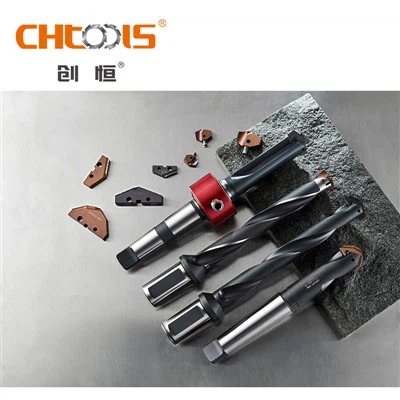
Yo! As an Indexable Drill supplier, I know how crucial it is to optimize cutting parameters to make these drills last longer. In this blog, I'll share some practical tips and insights on how you can do just that.
Understanding the Basics
First off, let's talk about what indexable drills are. These bad boys are pretty cool. An Indexable Drill, like the ones you can check out Indexable Drill Bit, is a drill with replaceable cutting inserts. Instead of replacing the whole drill when the cutting edge wears out, you can just swap the insert. This makes them cost - effective and super popular in the machining world.


The cutting parameters mainly include cutting speed, feed rate, and depth of cut. These factors are interrelated, and finding the right balance is key to extending the life of your indexable drill.
Cutting Speed
The cutting speed is basically how fast the drill bit is moving in relation to the workpiece. It's measured in surface feet per minute (SFM) or meters per minute (m/min). If the cutting speed is too high, the drill bit will generate a lot of heat. This heat can cause the Carbide Insert Of Spade Drill to wear out quickly, lose its hardness, and even break in extreme cases. On the other hand, if the cutting speed is too low, you'll be spending more time on the job, and the chips might not be formed properly, leading to poor surface finish and reduced tool life.
To find the optimal cutting speed, you need to consider the material of the workpiece. For example, when drilling aluminum, you can generally use a higher cutting speed compared to drilling steel. You can also refer to the manufacturer's recommendations, which usually provide a range of cutting speeds for different materials.
Feed Rate
The feed rate is how fast the drill bit moves into the workpiece. It's measured in inches per revolution (IPR) or millimeters per revolution (mm/r). A high feed rate can increase the productivity of your machining process, but if it's too high, it can put excessive stress on the drill bit. This can lead to chipping of the Spade Drill Insert or even breakage. A low feed rate, while it might seem safer, can cause the drill bit to rub against the workpiece instead of cutting, which also generates heat and shortens the tool life.
When determining the feed rate, you should consider the diameter of the drill, the material of the workpiece, and the type of insert. For larger - diameter drills, you can usually use a slightly higher feed rate. And again, the manufacturer's guidelines are a great resource.
Depth of Cut
The depth of cut is the thickness of the material that the drill bit removes in one pass. It's an important parameter because it affects the cutting force and the amount of heat generated. A large depth of cut can increase the productivity of your machining, but it also requires more power and can put more stress on the drill bit. If the depth of cut is too large, it can cause the drill bit to deflect or break. A small depth of cut, on the other hand, might require multiple passes, which can be time - consuming.
You need to balance the depth of cut based on the drill's capabilities and the requirements of the job. For most indexable drills, a moderate depth of cut is usually a good choice.
Optimizing the Parameters in Practice
Now that we've covered the basics, let's talk about how to optimize these parameters in real - world situations.
Start with a Trial Run
Before you start a big job, it's always a good idea to do a trial run. Select a small piece of the same material as your actual workpiece and try different combinations of cutting speed, feed rate, and depth of cut. Check the surface finish of the hole, the chip formation, and the condition of the drill bit. This way, you can get a feel for how the drill behaves under different conditions and find the optimal parameters.
Monitor the Process
Once you've set the initial parameters and started the machining process, keep an eye on it. Watch the chips coming out of the hole. If the chips are long and stringy, it might mean that the feed rate is too low. If the chips are very short and powdery, it could indicate that the cutting speed is too high. Also, listen for any unusual noises. A loud or grinding noise could be a sign that something is wrong with the cutting parameters.
Make Adjustments
Based on your observations during the machining process, make small adjustments to the cutting parameters. If the drill bit seems to be wearing out too quickly, try reducing the cutting speed or feed rate. If the machining process is taking too long, you can consider increasing the feed rate or cutting speed slightly. Just make sure to make these adjustments gradually and monitor the results after each change.
Other Factors Affecting Drill Life
Apart from the cutting parameters, there are other factors that can affect the life of your indexable drill.
Coolant
Using the right coolant is crucial. Coolant helps to reduce the heat generated during the cutting process, wash away the chips, and improve the surface finish of the hole. There are different types of coolants available, such as water - based coolants and oil - based coolants. You need to choose the appropriate coolant based on the material of the workpiece and the type of machining operation.
Workpiece Material Quality
The quality of the workpiece material can also have an impact on the drill life. If the material has hard inclusions or inconsistent hardness, it can cause uneven wear on the drill bit. Make sure to source high - quality workpiece materials to get the best results.
Machine Rigidity
The rigidity of the machining center or lathe is important. A rigid machine can help to maintain the stability of the drill bit during the cutting process. If the machine is not rigid enough, it can cause vibrations, which can lead to premature wear of the drill bit.
Conclusion
Optimizing the cutting parameters for indexable drills is a bit of a balancing act. By understanding the relationship between cutting speed, feed rate, and depth of cut, doing trial runs, monitoring the process, and considering other factors like coolant, workpiece material quality, and machine rigidity, you can significantly extend the life of your indexable drills.
If you're in the market for high - quality indexable drills or need more advice on optimizing cutting parameters, don't hesitate to reach out. We're here to help you get the most out of your machining operations.
References
- Machining Handbook, various editions
- Manufacturer's technical documentation for indexable drills