Hey there! As a nut tap supplier, I've seen firsthand how crucial it is to ensure the quality of these tools. Nut taps are essential for creating internal threads in nuts and other components, and using a low - quality tap can lead to a whole bunch of problems like inaccurate threads, broken taps, and wasted time and materials. So, in this blog, I'm gonna share some tips on how to check the quality of a nut tap.
1. Material Inspection
The first thing you gotta look at is the material of the nut tap. High - quality nut taps are usually made from high - speed steel (HSS) or carbide. HSS is a popular choice because it's tough, can withstand high temperatures, and is relatively affordable. Carbide, on the other hand, is even harder and more wear - resistant, but it's also more expensive.
To check the material, you can start by looking at the color and finish. A good HSS tap will have a consistent, smooth finish. If you see any signs of rust, pitting, or uneven coloring, that's a red flag. You can also try to do a simple hardness test. Of course, I'm not saying you should go around hammering your taps, but you can use a file to gently scratch an inconspicuous area. If the file easily cuts into the tap, it might not be made of high - quality material.

2. Thread Accuracy
The accuracy of the threads is super important. After all, the whole point of a nut tap is to create precise internal threads. You can use a thread gauge to check the pitch and the profile of the threads. A pitch gauge will tell you if the distance between the threads is correct, while a thread profile gauge will check the shape of the threads.
When using a thread gauge, make sure it fits snugly onto the tap. If there are any gaps or if the gauge doesn't fit at all, then the threads on the tap are inaccurate. Another way to check thread accuracy is by using the tap to create a thread in a test piece. Then, use a nut or a thread plug gauge to check the newly created thread. If the nut doesn't screw on smoothly or if the thread plug gauge doesn't fit properly, the tap has an issue with thread accuracy.
3. Surface Finish
A smooth surface finish is essential for a good nut tap. A rough surface can cause friction when the tap is being used, which can lead to premature wear and tear, and it can also make it difficult to create clean threads. You can inspect the surface finish with your eyes and your hands. Look for any rough spots, burrs, or scratches. Run your finger along the tap (be careful not to cut yourself) and feel for any irregularities.
If you want a more detailed inspection, you can use a microscope or a surface roughness tester. These tools can give you a more accurate measurement of the surface finish and help you determine if it meets the required standards.
4. Shank Inspection
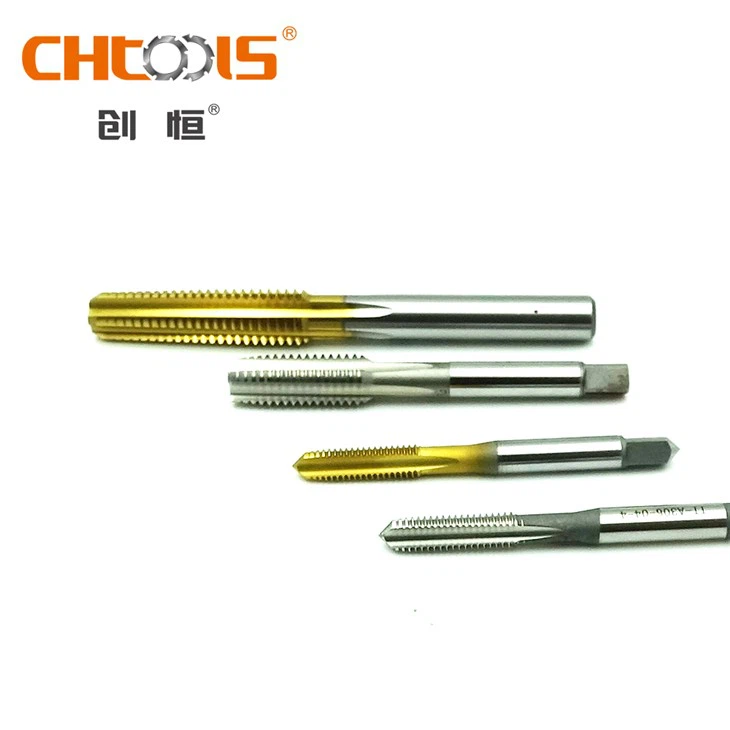
The shank of the nut tap is also important. There are two main types of shanks: Round Shank Type Nut Tap and Threaded Shank Type Nut Tap.
For round shank taps, check the diameter of the shank. It should be consistent and within the specified tolerance. Any variation in the diameter can cause problems when the tap is being held in a tap holder. For threaded shank taps, check the threads on the shank. They should be clean, accurate, and free from any damage. A damaged shank thread can make it difficult to attach the tap to the tap holder or other equipment.
5. Flute Design
The flutes on a nut tap are responsible for chip evacuation. Good flute design allows chips to be removed easily from the tap, preventing them from clogging and causing the tap to break. You can check the number, shape, and size of the flutes.
The number of flutes can vary depending on the type of tap and the application. Generally, more flutes can provide better chip evacuation, but it also depends on the size of the chips. The shape of the flutes should be smooth and well - defined. If the flutes are too shallow or too narrow, chips can get stuck. You can also check the rake angle of the flutes. A proper rake angle helps with cutting efficiency and chip formation.
6. Heat Treatment
Heat treatment is a crucial process in the manufacturing of nut taps. It helps to improve the hardness, toughness, and wear resistance of the tap. You can't directly see the effects of heat treatment, but you can look for signs of improper heat treatment.
For example, if the tap is too brittle and breaks easily, it might have been over - hardened during the heat treatment process. On the other hand, if the tap is too soft and wears out quickly, it might not have been hardened enough. You can also check for any signs of warping or distortion, which can be caused by uneven heat treatment.
7. Testing in Real - World Conditions
Finally, the best way to check the quality of a nut tap is to use it in real - world conditions. You can test the tap on a sample workpiece similar to the ones you'll be using it on in your actual production. Pay attention to how easily the tap cuts through the material, how well the chips are evacuated, and the quality of the threads it creates.
If the tap performs well in these tests, it's a good sign that it's of high quality. However, if you encounter problems like excessive wear, broken taps, or inaccurate threads, then there's an issue with the tap.
In conclusion, checking the quality of a nut tap involves a combination of visual inspection, using measuring tools, and real - world testing. By following these steps, you can ensure that you're getting a high - quality nut tap that will perform well and last a long time.
If you're in the market for nut taps and want to ensure you're getting the best quality, don't hesitate to reach out for a purchase negotiation. I'm here to help you find the perfect nut taps for your needs.
References
- "Tool and Manufacturing Engineers Handbook", Society of Manufacturing Engineers
- "Machining Fundamentals", Industrial Press Inc.