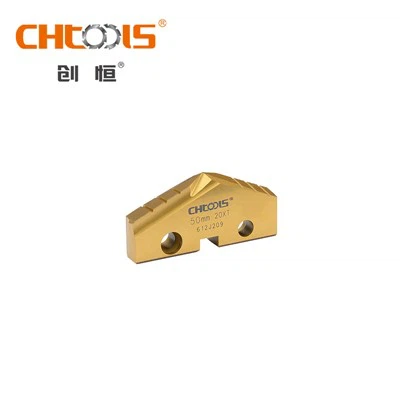
As a seasoned supplier of spade drills, I often encounter a diverse range of inquiries from customers across various industries. One question that has recently piqued my interest is whether a spade drill can be used for drilling in beryllium copper. In this blog post, I will delve into this topic, exploring the properties of beryllium copper, the capabilities of spade drills, and the factors to consider when using a spade drill for this particular application.
Understanding Beryllium Copper
Beryllium copper is a unique alloy known for its exceptional combination of high strength, excellent electrical and thermal conductivity, and remarkable corrosion resistance. These properties make it a popular choice in a wide range of industries, including aerospace, electronics, and automotive. However, beryllium copper also presents some challenges when it comes to machining, particularly drilling.
One of the main challenges of drilling beryllium copper is its high hardness. Beryllium copper typically has a hardness range of 200 - 400 HB (Brinell hardness), which is significantly harder than many other metals. This hardness can cause excessive wear on drill bits, leading to shorter tool life and reduced drilling efficiency.
Another challenge is the tendency of beryllium copper to work - harden during machining. As the drill bit cuts through the material, the surface layer of the beryllium copper can become harder, making it even more difficult to drill. This can result in increased cutting forces, higher temperatures, and poor hole quality.
Capabilities of Spade Drills
Spade drills are a type of cutting tool designed for drilling large - diameter holes in a variety of materials. They consist of a flat, blade - like cutting edge attached to a shank. Spade drills offer several advantages over traditional twist drills, especially when it comes to drilling large holes.
One of the key advantages of spade drills is their ability to remove a large amount of material quickly. The flat cutting edge of the spade drill allows for a higher feed rate and faster material removal compared to twist drills. This can significantly reduce the drilling time, especially for large - diameter holes.
Spade drills also offer better chip evacuation. The flat design of the cutting edge helps to break the chips into smaller pieces, which can be easily removed from the hole. This reduces the risk of chip clogging, which can cause damage to the drill bit and the workpiece.
In addition, spade drills are available in a variety of configurations, including Indexable Drill, Insert Drill, and Indexable Drill Bit. Indexable spade drills feature replaceable cutting inserts, which can be easily changed when they become worn. This reduces the cost of tool replacement and downtime.
Using Spade Drills for Drilling Beryllium Copper
When considering using a spade drill for drilling beryllium copper, several factors need to be taken into account.
Tool Material
The choice of tool material is crucial when drilling beryllium copper. High - speed steel (HSS) spade drills may not be suitable for drilling beryllium copper due to its high hardness. Instead, carbide - tipped spade drills are recommended. Carbide is a much harder material than HSS and can withstand the high cutting forces and temperatures generated when drilling beryllium copper.
Cutting Parameters
Proper cutting parameters are essential for successful drilling in beryllium copper. The cutting speed, feed rate, and depth of cut need to be carefully selected to ensure optimal performance.
The cutting speed for drilling beryllium copper with a spade drill should be relatively low. A high cutting speed can generate excessive heat, which can cause the drill bit to wear out quickly and lead to work - hardening of the material. A cutting speed in the range of 30 - 60 surface feet per minute (SFM) is typically recommended.


The feed rate should also be carefully controlled. A too - high feed rate can cause the drill bit to break or result in poor hole quality. A feed rate of 0.002 - 0.005 inches per revolution (IPR) is a good starting point, but it may need to be adjusted based on the specific application.
The depth of cut should be limited to avoid excessive cutting forces. A depth of cut of 0.05 - 0.1 inches is usually recommended.
Coolant
Using a coolant is essential when drilling beryllium copper. The coolant helps to reduce the temperature at the cutting edge, which can extend the tool life and improve the hole quality. A water - soluble coolant is a good choice as it provides both cooling and lubrication.
Hole Quality
When drilling beryllium copper with a spade drill, achieving good hole quality can be a challenge. The high hardness and work - hardening tendency of the material can cause issues such as rough hole surfaces, burrs, and dimensional inaccuracies.
To improve the hole quality, it is important to use a sharp drill bit and proper cutting parameters. Additionally, a finishing operation may be required to achieve the desired surface finish and dimensional accuracy.
Case Studies
Let's take a look at some real - world examples of using spade drills for drilling beryllium copper. In an aerospace manufacturing company, they needed to drill large - diameter holes in beryllium copper components. Initially, they used traditional twist drills, but they faced problems with tool wear, long drilling times, and poor hole quality.
After switching to carbide - tipped Indexable Drill Bit spade drills, they were able to significantly improve the drilling process. The spade drills allowed for a higher feed rate and faster material removal, reducing the drilling time by almost 50%. The better chip evacuation also improved the hole quality, resulting in smoother surfaces and more accurate dimensions.
Conclusion
In conclusion, a spade drill can be used for drilling in beryllium copper, but it requires careful consideration of several factors. The high hardness and work - hardening tendency of beryllium copper pose challenges, but the advantages of spade drills, such as high material removal rate and good chip evacuation, make them a viable option for this application.
By selecting the right tool material, using proper cutting parameters, and applying an appropriate coolant, it is possible to achieve successful drilling results in beryllium copper with a spade drill.
If you are in need of spade drills for drilling beryllium copper or other materials, I invite you to contact me for more information. Our company offers a wide range of spade drill products, including Indexable Drill, Insert Drill, and Indexable Drill Bit. We can provide you with professional advice and high - quality products to meet your specific drilling needs. Let's start a discussion about your project and find the best spade drill solution for you.
References
- Kalpakjian, S., & Schmid, S. R. (2009). Manufacturing Engineering and Technology. Pearson Prentice Hall.
- Trent, E. M., & Wright, P. K. (2000). Metal Cutting. Butterworth - Heinemann.