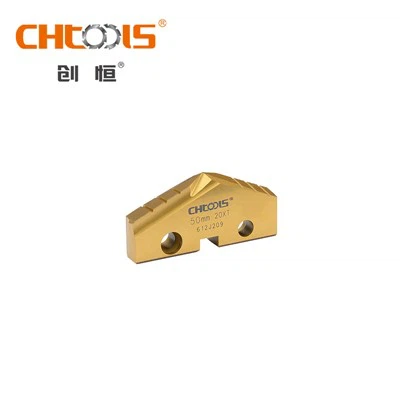
Hey there! As a supplier of solid rail cutters, I often get asked this question: Can a solid rail cutter cut rails with different cross - sections? Well, let's dive right into it and find out.
First off, let's understand what solid rail cutters are. These are powerful tools designed specifically for cutting rails. They're built tough to handle the demanding job of slicing through those thick, heavy rails that are used in railway tracks, industrial settings, and more.
Now, when it comes to different cross - sections of rails, there's quite a variety out there. Rails can have cross - sections that are flat - bottomed, grooved, or even shaped like an I - beam. Each of these cross - sections has its own unique characteristics, and cutting them requires a cutter that can adapt.
Our company offers two main types of solid rail cutters: the HSS Split Type Solid Rail Cutter and the HSS Integral Type Solid Rail Cutter. Let's take a closer look at how they perform when dealing with different rail cross - sections.
The HSS Split Type Solid Rail Cutter is a real workhorse. It's designed with a split structure that allows for easy installation and removal. This type of cutter is great for handling a wide range of rail cross - sections. The split design gives it a bit more flexibility, which means it can adapt to different shapes and sizes. For example, when cutting a flat - bottomed rail, the cutter can be adjusted to fit snugly against the surface, ensuring a clean and precise cut. And when it comes to grooved rails, the split design can help the cutter navigate the grooves without getting stuck.
On the other hand, the HSS Integral Type Solid Rail Cutter is known for its strength and durability. It's a one - piece design that provides excellent stability during the cutting process. This cutter is also capable of cutting rails with different cross - sections, but it might have a slightly different approach. The integral design makes it ideal for cutting through thicker and more rigid rails, like those with an I - beam cross - section. It can handle the high pressure and stress that comes with cutting these types of rails, ensuring a smooth and efficient cut.
But how do these cutters actually work when faced with different cross - sections? Well, it all comes down to the cutting edge. Both the split type and the integral type solid rail cutters are made from high - speed steel (HSS), which is known for its sharpness and wear resistance. The cutting edge is precisely engineered to slice through the rail material, regardless of its cross - section.
When cutting a rail, the cutter rotates at a high speed, and the cutting edge applies pressure to the rail surface. The shape of the cross - section determines how the cutter interacts with the rail. For example, a flat - bottomed rail provides a large, flat surface for the cutter to work on, while a grooved rail requires the cutter to follow the contours of the grooves. The key is to have a cutter that can adjust to these differences and maintain a consistent cutting performance.
Another factor to consider is the cutting speed. Different cross - sections may require different cutting speeds to achieve the best results. For thinner rails, a higher cutting speed might be appropriate, as the cutter can quickly slice through the material. However, for thicker and more complex cross - sections, a slower cutting speed may be necessary to ensure a clean and accurate cut. Our solid rail cutters are designed to be adjustable, allowing you to set the cutting speed according to the specific requirements of the rail cross - section.
In addition to the cutting speed, the feed rate also plays an important role. The feed rate refers to how fast the cutter moves along the rail during the cutting process. A proper feed rate is crucial for achieving a smooth and efficient cut. If the feed rate is too fast, the cutter may not be able to fully penetrate the rail, resulting in a rough cut. On the other hand, if the feed rate is too slow, it can lead to excessive heat buildup and premature wear of the cutter.


So, to answer the question “Can a solid rail cutter cut rails with different cross - sections?”, the answer is yes! Our HSS Split Type Solid Rail Cutter and HSS Integral Type Solid Rail Cutter are both capable of handling a wide range of rail cross - sections. They're designed with the latest technology and high - quality materials to ensure a reliable and efficient cutting performance.
Whether you're working on a railway construction project, an industrial maintenance job, or any other application that involves cutting rails, our solid rail cutters are the perfect choice. They offer the flexibility, strength, and precision you need to get the job done right.
If you're interested in learning more about our solid rail cutters or have any questions about cutting rails with different cross - sections, don't hesitate to reach out. We're here to help you find the best solution for your specific needs. Contact us today to start a discussion about your requirements and explore how our solid rail cutters can benefit your projects.
References
- Railway Engineering Handbook, various editions
- Journal of Materials Science and Engineering, articles related to high - speed steel cutting tools