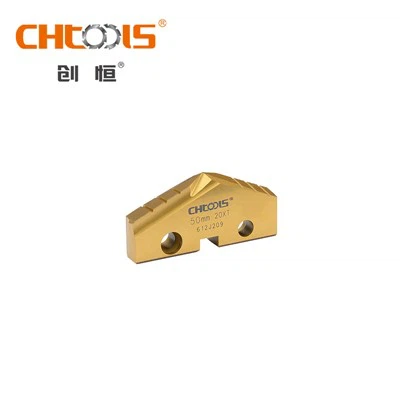
Hey there! As a supplier of solid rail cutters, I often get asked about the dust emission during the cutting process of our products. It's a crucial topic, especially for those who are concerned about workplace safety and environmental impact. So, let's dive right in and explore what exactly the dust emission situation is when using a solid rail cutter.
First off, what causes dust emission during the cutting process? When our solid rail cutter, whether it's HSS Integral Type Solid Rail Cutter or HSS Split Type Solid Rail Cutter, cuts through the rails, it essentially removes small particles from the rail material. These particles become airborne and are what we call dust. The main factors that influence the amount of dust emission include the type of rail material, the cutting speed, the cutter's design, and the cutting conditions.
Different rail materials generate different amounts of dust. For example, if the rail is made of a harder alloy, the cutting process might produce less dust compared to a softer material. This is because the harder material is more resistant to being chipped away into small particles. On the other hand, softer materials can break down more easily, resulting in a larger amount of dust.
The cutting speed also plays a significant role. If the cutter is operating at a very high speed, it can generate more dust as it cuts through the rail at a faster pace. The rapid movement of the cutter can cause more material to be removed in a short period, leading to an increased amount of airborne particles. However, if the speed is too slow, it may also cause issues. The cutter might not cut through the rail efficiently, leading to more friction and potentially more dust being generated due to the extra wear on the material.
Now, let's talk about the cutter's design. Our HSS Integral Type Solid Rail Cutter is designed for high - performance cutting. It has a well - crafted blade geometry that helps in making clean cuts. This design feature can reduce the amount of dust generated because it cuts through the rail more precisely, minimizing the amount of material that gets broken into small particles. Similarly, the HSS Split Type Solid Rail Cutter has its own unique design advantages. The split type allows for better heat dissipation during the cutting process. When the cutter doesn't overheat, it can maintain its cutting efficiency and reduce the likelihood of excessive material breakage, which in turn helps in controlling dust emission.
The cutting conditions are also important. If the cutting area is well - ventilated, the dust that is generated can be quickly dispersed, reducing the concentration of dust in the immediate working area. However, in a poorly ventilated space, the dust can accumulate, posing a greater risk to the workers' health. Additionally, using coolant during the cutting process can significantly reduce dust emission. The coolant helps to lubricate the cutting edge, reducing friction and preventing the formation of excessive dust. It also cools down the cutter and the rail, which can improve the overall cutting performance.
So, what are the potential risks associated with dust emission during the cutting process? The dust generated from cutting rails can contain various harmful substances. For example, it may contain metal particles, which if inhaled, can cause respiratory problems such as coughing, shortness of breath, and in severe cases, long - term lung diseases. The dust can also cause eye irritation and skin problems if it comes into contact with the eyes or skin.
As a responsible supplier, we are well - aware of these risks and have taken steps to minimize dust emission from our solid rail cutters. We continuously improve our cutter designs to make them more efficient and less dusty. We also provide information to our customers on how to use the cutters in a way that reduces dust generation, such as recommending the appropriate cutting speed, using coolant, and ensuring proper ventilation.


If you're in the market for a solid rail cutter, it's important to consider the dust emission factor. You want to choose a cutter that not only meets your cutting requirements but also keeps your workplace safe and clean. Our HSS Integral Type Solid Rail Cutter and HSS Split Type Solid Rail Cutter are designed with these considerations in mind.
If you have any questions about our solid rail cutters or want to discuss your specific needs, don't hesitate to reach out. We're here to help you make the best choice for your operations. Whether you're a small - scale workshop or a large - scale industrial facility, our solid rail cutters can provide you with reliable and efficient cutting performance while keeping dust emission under control.
In conclusion, understanding the dust emission during the cutting process of a solid rail cutter is essential for ensuring workplace safety and environmental protection. By choosing the right cutter, operating it under the proper conditions, and taking necessary precautions, you can minimize the negative impacts of dust. So, if you're interested in our products, feel free to contact us for more information and to start a procurement discussion.
References
- General knowledge on metal cutting processes and safety regulations
- In - house research and development data on solid rail cutter design and performance